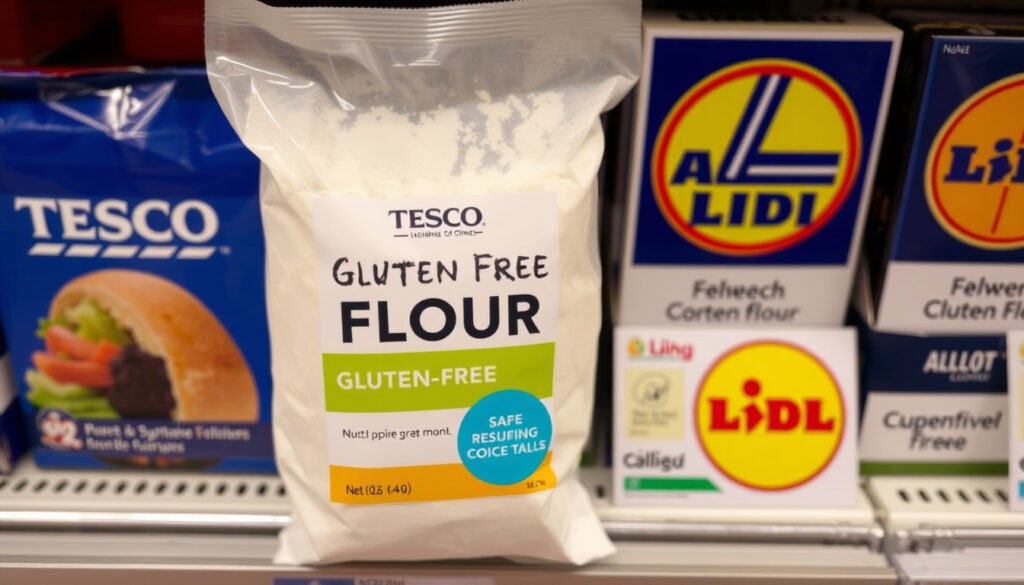
Is Cornflour Gluten Free? A Coeliac Guide (Tesco, Aldi, Lidl)
Cornflour is naturally gluten-free, but supermarket labelling and cross-contamination risks make it a minefield for coeliac shoppers. This guide cuts through the confusion, brand by brand.
Naturally gluten-free: Cornflour (maize starch) is gluten-free in its pure form. ·
Coeliac UK stance: Plain cornflour is safe for coeliacs; avoid cross-contamination. ·
Prevalence: About 1 in 100 people have coeliac disease globally. ·
Cross-contamination risk: Some brands may process cornflour on shared equipment with wheat.
Quick snapshot
- Pure cornflour is gluten-free by nature (Beyond Celiac (patient advocacy organisation))
- Coeliac UK confirms plain cornflour is safe for coeliacs (Coeliac UK (UK charity))
- Exact gluten-free status of Tesco, Aldi, Lidl own-brand cornflour (no official certification) (Coeliac UK (UK charity))
- Whether Gem cornflour still contains gluten or just lost its labelling (Coeliac UK (UK charity))
- FDA gluten-free labelling standard (≤20 ppm) unchanged since 2013 (U.S. Food and Drug Administration (regulator))
- Growing consumer demand for certified gluten-free labels on supermarket own-brands
Four key facts, one pattern: whether cornflour is safe depends on how it’s processed and labelled — not just what it’s made from.
| Fact | Value |
|---|---|
| Gluten-free by nature | Yes, when made from maize only |
| Certified brands available | Freee, some own-brands |
| Common use | Thickening sauces, gravies, baking |
| Coeliac UK position | Plain cornflour is safe |
The pattern: The ingredient itself is safe, but the packaging can mislead. Certification is the gold standard.
Can celiacs eat cornflour?
Pure cornflour is naturally gluten-free
- Corn does not contain gluten, so plain cornflour (maize starch) is gluten-free in its pure form (Beyond Celiac (patient advocacy organisation)).
- Coeliac UK confirms that plain cornflour is safe for people with coeliac disease (Coeliac UK (UK charity)).
- FDA guidance states that wheat, barley, and rye are the primary gluten-containing grains — corn is not among them (U.S. Food and Drug Administration (regulator)).
Cross-contamination risks and certified brands
- Even naturally gluten-free cornflour can be contaminated if processed on shared equipment with wheat (Celiac Disease Foundation (patient advocacy)).
- Products labelled “gluten-free” must meet <20 ppm gluten standards in the US (U.S. Food and Drug Administration (regulator)).
- Certified brands like Freee offer third-party tested cornflour.
Cornflour is safe by nature, but the manufacturing environment decides whether it stays safe. For coeliacs, a certified gluten-free label isn’t a luxury — it’s the only reliable protection against cross-contamination.
The implication: For UK coeliac shoppers, the choice is binary: buy a certified brand or risk unwitting exposure from a shared production line.
Is Tesco cornflour gluten-free?
Tesco own-brand cornflour ingredients
- Tesco Cornflour 500g lists “Maize Starch” as the only ingredient — no gluten-containing additives are listed on the packet (Tesco product listing (retailer)).
- However, the product is not labelled as “gluten-free” on all packs, and no certification logo appears.
Coeliac UK certification and customer feedback
- Coeliac UK advises checking for cross-contamination warnings even on single-ingredient products (Coeliac UK (UK charity)).
- Reddit users have reported that Gem cornflour recently removed its gluten-free label, raising concerns that Tesco may follow a similar pattern.
Tesco cornflour is likely safe, but without an explicit gluten-free label, coeliac shoppers are left guessing. A single unclear packet can erode trust in an entire supermarket range.
What this means: Until Tesco adds a gluten-free certification to its cornflour, cautious coeliacs may prefer to buy a certified alternative.
What flour has no gluten?
List of gluten-free flours
- Naturally gluten-free flours include rice flour, almond flour, coconut flour, potato starch, and tapioca flour (Coeliac UK (UK charity)).
- Cornflour (cornstarch) is a popular thickener but not always labelled as gluten-free.
- The Schär guide lists 12 gluten-free flours, including cornflour (Schär (gluten-free food manufacturer)).
Cornflour vs. other alternatives
- Cornflour is ideal for thickening sauces and gravies because it creates a clear, glossy finish (BBC Good Food (UK cooking resource)).
- Rice flour and potato starch work similarly but may alter texture.
The pattern: Cornflour is one of many options, but its neutral flavour and thickening power make it a kitchen staple — if you can trust the label.
What are 6 foods celiacs should avoid?
Obvious gluten sources
- Wheat, barley, and rye are the primary gluten-containing grains (U.S. Food and Drug Administration (regulator)).
- Oats may be cross-contaminated unless certified gluten-free.
Surprising hidden gluten foods
- Sauces, soups, and processed meats often contain hidden gluten as thickeners or fillers (NHS (UK health service)).
- Weetabix is not gluten-free (contains wheat).
- Some cornflour brands may include wheat starch or be processed on shared lines (Coeliac UK (UK charity)).
Convenience foods often hide gluten in unexpected places. For coeliacs, reading every label is exhausting but non-negotiable — one hidden ingredient can mean days of recovery.
Why this matters: The risk isn’t just in bread and pasta — it’s in the fine print of nearly every processed product. Cornflour can be a safe choice, but only if the label confirms it.
What is surprisingly not gluten-free?
Common misconceptions
- Many people assume all corn-based products are gluten-free, but cross-contamination and added ingredients can change the picture (Celiac Disease Foundation (patient advocacy)).
- Weetabix, a common breakfast cereal, is not gluten-free.
- Modified corn starch is usually gluten-free, but the source of modification should be verified (Fearless Dining (gluten-free resource)).
Label reading tips
- Always look for an explicit “gluten-free” label or certification logo.
- Check for “may contain wheat” or “made in a facility that processes wheat” warnings.
- When in doubt, contact the manufacturer directly.
The catch: Trusting an ingredient name alone is not enough. The safest cornflour is the one that carries an official gluten-free stamp.
Clarity: What we know and what we don’t
Confirmed facts
- Pure cornflour is gluten-free.
- Coeliac UK states cornflour is safe.
What’s unclear
- Exact gluten-free status of Tesco, Aldi, Lidl own-brand cornflour (no official certification).
- Whether Gem cornflour still contains gluten or just lost labelling.
- Modified corn starch gluten-free status depends on processing and verification.
The pattern: Confirmed facts outweigh uncertainties for cautious shoppers, but certification remains key.
Expert quotes
“Plain cornflour is safe for people with coeliac disease. The risk comes from cross-contamination during processing, so always check for a gluten-free label.”
— Coeliac UK spokesperson, via Woman’s Weekly
“Corn flour is gluten-free in its natural form. But consumers need to be aware that some brands may mix it with other flours or process it on shared equipment.”
— Beyond Celiac, patient advocacy organisation
Summary
Cornflour is inherently gluten-free, but the lack of consistent certification among supermarket own-brands leaves coeliac shoppers in a bind. For UK coeliac shoppers, the choice is clear: buy a certified gluten-free brand like Freee, or accept the risk of cross-contamination from an uncertified packet. Anything less is a gamble on your health.
Related reading: How to Make Garlic Bread · Jamie Oliver Eat Yourself Healthy
Frequently asked questions
Is modified corn starch gluten free?
Modified corn starch is usually gluten-free, but it is important to verify the source and processing methods. The FDA considers it gluten-free unless derived from wheat (U.S. Food and Drug Administration (regulator)).
What is the difference between cornflour and cornstarch?
In the UK and Commonwealth, “cornflour” typically means cornstarch — a fine white powder used for thickening. In the US, “corn flour” is ground cornmeal. The terms are not interchangeable in recipes (The Gluten Free Alchemist (cooking guide)).
Can I trust supermarket own-brand cornflour if not labelled GF?
It depends on the retailer. Some own-brands are produced on dedicated lines, but without a gluten-free label you cannot be sure. Coeliac UK advises checking for cross-contamination warnings and contacting the manufacturer if in doubt.
Are there any gluten-free cornflour brands?
Yes. Freee is a well-known certified gluten-free brand. Other supermarket own-brands may be gluten-free but are not always labelled as such. Look for the certified gluten-free logo.
Does Weetabix have gluten in it?
Yes, Weetabix contains wheat and is not gluten-free. It is unsuitable for people with coeliac disease.
Is corn gluten free?
Yes, corn is naturally gluten-free. However, corn-based products can be cross-contaminated or contain gluten additives, so always check the label.
What are symptoms of accidental gluten ingestion?
Symptoms vary but can include abdominal pain, bloating, diarrhoea, fatigue, and headaches. For people with coeliac disease, even small amounts can trigger an immune reaction.
More related posts
 Jason Bateman Movies and TV Shows: Complete Filmography Guide
 GBP to Turkish Lira 2026: Rates, Tips & Travel Guide
 Aston Villa Match Today – No Fixture Today, Forest Game Guide
 Avengers Endgame: Hit or Flop? Full Guide to the MCU Finale
 Mark Williams Snooker: Net Worth, Family & Ranking
 What Is Composite Bonding? Ireland Cost, Pain & Duration
 Punjab Kings vs Lucknow Super Giants Match Scorecard, IPL 2026
 Who Won Big Brother 2025? Winner Revealed (Richard Storry)
