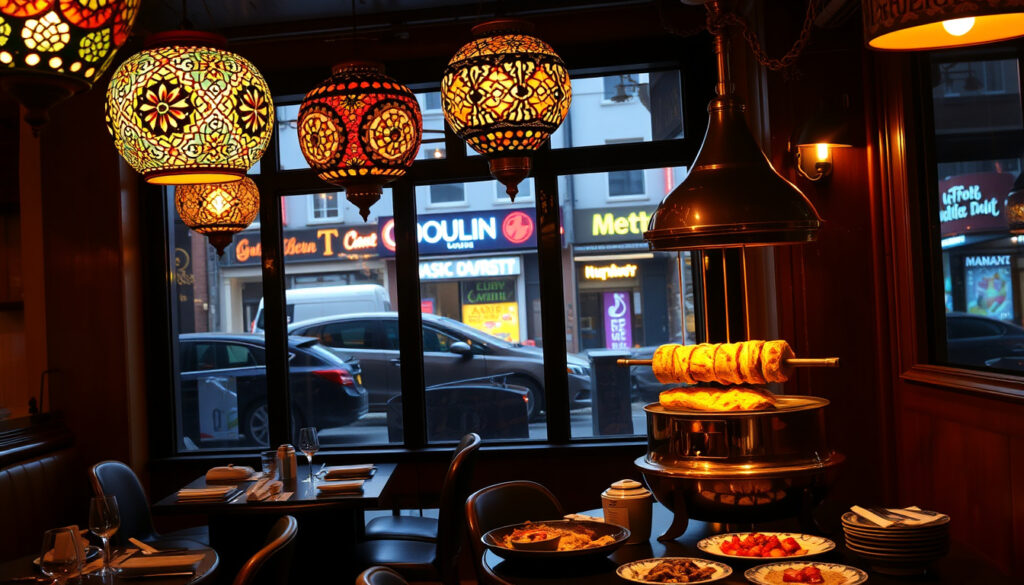
Turkish Restaurant Near Me – Best Spots in Dublin & Cork
There’s a moment when a craving for something warm, spiced, and utterly satisfying hits — and your phone comes out for a search. Whether it’s the perfect döner after a night out or a leisurely breakfast spread that feels like a holiday, finding a genuine Turkish restaurant nearby can make or break the evening.
Most popular Turkish dish globally: Döner kebab ·
Typical items in a Turkish breakfast: 10–12 dishes ·
Turkish restaurants in Dublin (approx.): 20+ establishments
Quick snapshot
- Döner kebab is a popular Turkish street food (Baba’de (restaurant in West Cork))
- Turkish breakfast includes menemen, simit, and cheese (Dish Cult (food guide))
- Turkish grill is generally high in protein (Keshk Restaurant (Dublin halal dining))
- The exact number of Turkish restaurants in Dublin is unknown (Dish Cult (food guide))
- Health classification of Turkish grills varies by dish (Keshk Restaurant (Dublin halal dining))
- Pasha Restaurant is one of the longest-standing kebab shops in Dublin City (Dish Cult (food guide))
- Fayrouz Restaurant reopened after renovations on Thursday 5 February (Fayrouz Restaurant (Dublin Middle Eastern))
- More seasonal tasting menus blending Turkish and Irish ingredients are emerging (Customs House Baltimore (West Cork hospitality))
- BYOB Turkish dining with no corkage fee is growing in Dublin (Dish Cult (food guide))
| Label | Value |
|---|---|
| Total Turkish restaurants in Dublin (approx.) | 20+ listings on Just Eat |
| Most common Turkish dish ordered abroad | Döner kebab |
| Typical Turkish breakfast item count | 10-12 dishes |
| Popular Dublin Turkish grill | Reyna on Dame Street (Dish Cult (food guide)) |
| West Cork Turkish option | Baba’de in Baltimore (Baba’de (restaurant in West Cork)) |
| Halal Turkish option in Dublin | Keshk Restaurant (Keshk Restaurant (Dublin halal dining)) |
| BYOB Turkish dining | Keshk – no corkage fee (Dish Cult (food guide)) |
| Michelin-starred Turkish-inspired | Dede Restaurant, West Cork (Customs House Baltimore (West Cork hospitality)) |
The pattern: these eight entries cover the range of Turkish dining options available to Dublin and Cork diners.
What is the most popular Turkish dish?
Walk into any Turkish restaurant from Dublin to Cork, and you’ll spot döner kebab spinning on the vertical rotisserie. It’s the global ambassador of Turkish street food, but the real story goes deeper than sliced meat.
Top Turkish dishes worldwide
Döner kebab leads the pack internationally — sliced lamb, chicken, or beef wrapped in flatbread with salad and sauce. According to Baba’de (restaurant in West Cork), it’s the most-ordered Turkish dish abroad. Close behind is lahmacun, a thin, crispy flatbread topped with minced lamb, tomatoes, and herbs — often called Turkish pizza. Dish Cult (food guide) notes these two dominate Dublin’s Turkish menus.
Most common Turkish food
Beyond kebabs, lamb and rice dishes are everyday staples in Turkish homes and restaurants. Lamb şiş — marinated cubes of lamb grilled on skewers — is a menu constant. According to Keshk Restaurant (Dublin halal dining), rice pilaf and grilled vegetables accompany most main plates. Baklava, the syrup-soaked pastry of layered filo and pistachios, is the dessert that closes most meals.
Beyond kebabs: lesser-known specialties
- Manti: tiny handmade dumplings filled with spiced lamb, topped with garlic yogurt and melted butter — a Turkish comfort classic.
- İskender kebab: sliced döner meat on pide bread, drenched in tomato sauce and melted butter, served with yogurt. A Bursa original.
- Testi kebabı: lamb and vegetables slow-cooked in a sealed clay pot, cracked open at the table for dramatic effect.
Customs House Baltimore (West Cork hospitality) highlights that Dede Restaurant in West Cork blends these Turkish traditions with Irish seasonal ingredients, offering tasting menus that feature testi kebabı reinterpreted with local lamb.
Döner kebab is the star, but Dublin diners who skip manti or İskender kebab miss the depth of Turkish cuisine. For Cork residents, Dede Restaurant’s tasting menu bridges Turkish heritage and Irish produce — a combination hard to find elsewhere.
Is Turkish grill healthy?
The short answer: yes, if you choose wisely. Turkish grill relies on open-fire cooking, which renders fat away from the meat, and pairs everything with fresh vegetables and yogurt. But not all dishes are created equal.
Nutritional profile of Turkish grills
Grilling is one of the healthier cooking methods — it uses little added oil and lets fat drip off. A typical lamb şiş portion (150g) provides roughly 25g of protein with moderate saturated fat. According to Keshk Restaurant (Dublin halal dining), their grilled dishes come with rice pilaf, grilled peppers, tomatoes, and often a side salad. The yogurt-based sauces common in Turkish cuisine add probiotics and calcium. Dish Cult (food guide) notes that Reyna on Dame Street in Dublin grills meat over charcoal, which reduces fat content compared to pan-frying.
Health benefits of Turkish spices
- Sumac: tart, lemony spice with antioxidant and anti-inflammatory properties.
- Aleppo pepper: mild heat with a hint of fruity sweetness, adds flavor without salt.
- Yogurt: staple in marinades and side dishes — contains probiotics and protein.
Fayrouz Restaurant (Dublin Middle Eastern) uses these spices to create authentic dishes with a modern twist, emphasizing fresh, good-quality ingredients.
Tips for healthy ordering
Grilled chicken şiş or adana kebab (spicy minced lamb on a flat skewer) with a side of bulgur pilaf and a green salad is a protein-rich, balanced meal. Watch out for extra pide bread (Turkish flatbread) which adds refined carbs. According to Keshk Restaurant (Dublin halal dining), their menu labels vegan-friendly and lighter options clearly.
A lamb döner wrap with extra mayonnaise and chips can easily top 800 calories. The cooking method is healthy; the add-ons are where calories creep in. Ordering a platter with salad instead of a wrap keeps the meal lean.
What’s a typical Turkish breakfast?
A Turkish breakfast is a ceremony, not a meal. It arrives on multiple small plates — cheeses, olives, eggs, jams, honey, pastries, and fresh bread — designed to be shared slowly over tea.
Components of a Turkish breakfast
A standard spread includes 10–12 dishes: beyaz peynir (white cheese), kaşar (yellow cheese), black and green olives, menemen (scrambled eggs with tomatoes, peppers, and spices), simit (sesame-covered bread rings), honey and kaymak (clotted cream), and a variety of fruit jams. According to Dish Cult (food guide), many Dublin Turkish restaurants offer breakfast or brunch options featuring menemen and simit. Baba’de (restaurant in West Cork) includes a Turkish-inspired brunch on bank holiday weekends from 1 PM.
Turkish dinner traditions
Dinner traditionally starts with soup — mercimek çorbası (red lentil soup) is a national staple. The main course often features a grilled meat dish or a stew cooked in a clay pot. Customs House Baltimore (West Cork hospitality) describes Dede Restaurant’s dinner menu as a tasting journey: small plates of seasonal Turkish-Irish blends, followed by a grilled lamb or fish main, and finished with baklava or a light dessert.
Regional variations
Coastal Turkish regions lean heavily on seafood and olive oil. The southeast (Gaziantep, Urfa) is famous for its spicy kebabs and pistachio-rich baklava. According to Fayrouz Restaurant (Dublin Middle Eastern), Turkish breakfast variations extend to Mediterranean-style breakfasts with olives, fresh herbs, and thick yogurt dips.
Not every “Turkish breakfast” in Dublin is authentic — some Middle Eastern restaurants label similar spreads as Turkish. If the menu lists sucuklu yumurta (spicy sausage with eggs) and börek (savory pastries), you’re likely in a genuine Turkish spot.
What’s the difference between Turkish and Arabic food?
Many diners blur the line between Turkish and Arabic cuisines — both use lamb, flatbreads, and mezze. But the cooking methods, spice palettes, and core ingredients tell a different story.
Cooking methods: grill vs stew
Turkish cuisine is defined by the mangal — charcoal grilling. Meats are marinated and cooked over open flame quickly. Arabic cuisine leans toward slow stews, like lamb mandi (cooked in a pit underground) or kabsa (spiced rice with braised meat). According to Keshk Restaurant (Dublin halal dining), their Turkish dishes use grilling and clay-pot techniques, while their Mediterranean offerings include slow-cooked stews.
Spice profiles
This comparison table lays out the key differences in how each cuisine approaches flavour.
| Aspect | Turkish cuisine | Arabic cuisine |
|---|---|---|
| Dominant spices | Sumac, Aleppo pepper, mint, oregano | Cumin, coriander, turmeric, cinnamon |
| Dairy use | Yogurt in almost every meal | Yogurt less common; tahini more used |
| Core cooking method | Grilling (mangal) | Slow cooking, stewing, baking |
| Bread | Pide (thick flatbread), lavash | Pita, khubz (thin, pocket bread) |
| Dessert style | Baklava (syrup+phyllo), künefe | Knafeh, basbousa, ma’amoul |
| Fermented drinks | Ayran (yogurt drink) | Jallab (date molasses drink) |
Fayrouz Restaurant (Dublin Middle Eastern) describes itself as Middle Eastern, using fresh ingredients with a modern twist on traditional favorites, which includes both stews and grills — showing the overlap between the two cuisines.
Dish similarities and key differences
- Both use lamb, chicken, and flatbreads extensively.
- Turkish food relies on yogurt and tomato paste as base ingredients; Arabic food uses tahini, pomegranate molasses, and rose water.
- Hummus and baba ganoush are Middle Eastern staples that appear on Turkish menus, but are not originally Turkish — authentic Turkish meze includes haydari (yogurt dip), ezme (spicy tomato paste), and acılı ezme (hot pepper dip).
What this means: if you see “Adana kebab” and “İskender kebab” on the menu alongside haydari and şalgam (sour turnip drink), you’ve found a genuine Turkish kitchen. If the menu leads with hummus, falafel, and shawarma, it’s Arabic cuisine — similar but distinct.
For Dublin diners searching “Turkish restaurant near me”, a menu heavy on hummus and falafel likely points to a Middle Eastern restaurant, not a Turkish one. Real Turkish spots lead with grilled meats, yogurt dips, and pide bread.
What are the top 10 Turkish dishes?
These ten dishes form the backbone of Turkish dining culture — from street food to family dinner tables.
Classic appetizers
- Haydari: thick yogurt dip with dill, garlic, and mint — served with warm bread.
- Ezme: spicy crushed tomato, pepper, and onion salad with pomegranate molasses.
- Sigara böreği: fried phyllo rolls filled with feta cheese and parsley.
Main courses
- Döner kebab: layered, spit-roasted meat (lamb, chicken, or beef) — the most exported Turkish dish.
- Lahmacun: thin, crispy flatbread topped with minced lamb, tomato, and herbs — Turkish pizza.
- İskender kebab: döner meat over pide bread, tomato sauce, melted butter, and yogurt — named after its 19th-century inventor.
- Manti: beef or lamb dumplings with garlic yogurt, butter, and paprika oil.
- Şiş kebab: marinated cubes of lamb or chicken grilled on skewers.
Desserts and drinks
- Baklava: layers of phyllo pastry filled with pistachios or walnuts, soaked in honey syrup.
- Künefe: shredded phyllo dough layered with unsalted cheese, baked, and soaked in syrup — served hot.
Dish Cult (food guide) confirms that Dublin’s Turkish restaurants — from Pasha near O’Connell Street to Reyna on Dame Street — serve most of these dishes. Customs House Baltimore (West Cork hospitality) notes that Dede Restaurant’s tasting menu includes a version of manti with local lamb and Irish herbs.
The pattern: these ten dishes cover the range of Turkish cooking — grilled, baked, fried, and fermented. A restaurant that offers at least six of these is likely authentic.
Upsides
- Grilled dishes are high in protein and low in added fat.
- Turkish breakfasts offer variety and shareable portions.
- Yogurt-based sides add probiotics to your meal.
- BYOB options (like Keshk) save on drink costs.
- Vegetarian and vegan options available at many spots.
Downsides
- Some dishes (döner wraps, fried börek) are calorie-dense.
- Not all “Turkish” restaurants in Dublin are authentic — some are general Middle Eastern.
- Vegan options are limited at meat-focused grill spots.
- Prices at sit-down restaurants range €12–25 per main.
- Takeaway döner quality varies widely between shops.
Grilling over charcoal is the heart of Turkish cooking — it’s not just about the meat, it’s about the fire’s smell, the timing, the yogurt that cools it all down.
— Dish Cult (food guide), on Reyna Turkish Grill’s approach
Our menu brings together Turkish and Irish seasonal ingredients — you taste the lamb from West Cork, but the spice blend is straight from Gaziantep.
— Customs House Baltimore (West Cork hospitality), describing Dede Restaurant’s concept
The choice for Dublin and Cork diners is becoming clear: if you want a quick, familiar döner, the takeaway spots on O’Connell Street have you covered. If you’re after an immersive Turkish dining experience — with manti, haydari, and İskender kebab — go for Keshk (BYOB, halal, vegan-friendly) in Dublin or Dede (Michelin-starred tasting menu) in West Cork. For Cork residents, the option has never been stronger.
Related reading: Jacket Potato Near Me · KFC Drive Thru Near Me Guide
For a more detailed look at the authentic dishes available, check out this comprehensive Dublin menu guide that covers everything from lahmacun to proper baklava.
Frequently asked questions
Is Turkish bread healthier than white bread?
Turkish pide and lavash are typically made from white flour, similar to standard white bread. However, wholemeal versions (tam buğday ekmeği) are available at some restaurants. According to Keshk Restaurant (Dublin halal dining), their bread is freshly baked daily with minimal preservatives.
Are Turkish restaurants in Dublin halal?
Many Turkish restaurants in Dublin serve halal meat. Keshk Restaurant (Dublin halal dining) explicitly states it is halal. Other spots like Pasha and Reyna also use halal-certified suppliers, but it’s best to check directly.
What is the average cost of a meal at a Turkish restaurant?
A main dish at a Turkish restaurant in Dublin costs between €12 and €20. A full meal with a starter, main, and drink ranges from €20 to €35. BYOB restaurants like Keshk can save on drinks. In West Cork, Dede Restaurant’s tasting menu is priced higher.
Can I find vegan options at Turkish restaurants?
Yes, but options are limited. Most Turkish restaurants offer vegetarian meze like haydari, ezme, and stuffed vine leaves. Keshk Restaurant (Dublin halal dining) notes it is vegan-friendly, with dishes like lentil soup and grilled vegetable platters.
What is the difference between Turkish and Greek food?
Both cuisines share Ottoman roots — similar dishes like dolma (stuffed vegetables) and baklava appear in both. Key differences: Turkish food uses yogurt and tomato paste more, while Greek cuisine relies on olive oil and lemon. Turkish kebabs are grilled; Greek gyros is rotisserie-cooked.
What is the most authentic Turkish restaurant in Cork?
In Cork City, Nosta Restaurant serves traditional Turkish specialties including kebabs and pide. In West Cork, Baba’de in Baltimore offers seasonal Turkish mezze, brunch, and dinner. Dede Restaurant, also in Baltimore, is a 2-star Michelin restaurant with a Turkish-Irish tasting menu.
For anyone in Dublin or Cork typing “Turkish restaurant near me” into their phone, the difference between a disappointing meal and a memorable one comes down to knowing what to order — and where. Dublin’s Turkish dining scene is strongest around the city centre, with Keshk and Reyna leading for grilled mains and breakfast. Cork and West Cork offer something unique: Michelin-starred Turkish-Irish fusion at Dede and seasonal rustic Turkish dining at Baba’de. The choice is clear: pick a restaurant that menus Turkish classics beyond döner, and you’ll leave with a genuine taste of Turkey.
More related posts
 Jason Bateman Movies and TV Shows: Complete Filmography Guide
 How Old Was Elvis When He Met Priscilla – He Was 24, She 14
 How Old Is Earth – Science, Religion and Cosmic Timeline
 What Is a Biometric Passport? How to Identify and Use It
 Alan Yentob obituary: BBC creative director dies aged 78
 What Is the Median – Definition, Calculation and Mean Comparison
 18 Stone in Lbs – Convert 252 Pounds and Check Your BMI
 Ex Display Summer Houses for Sale: Cost & Planning Guide
