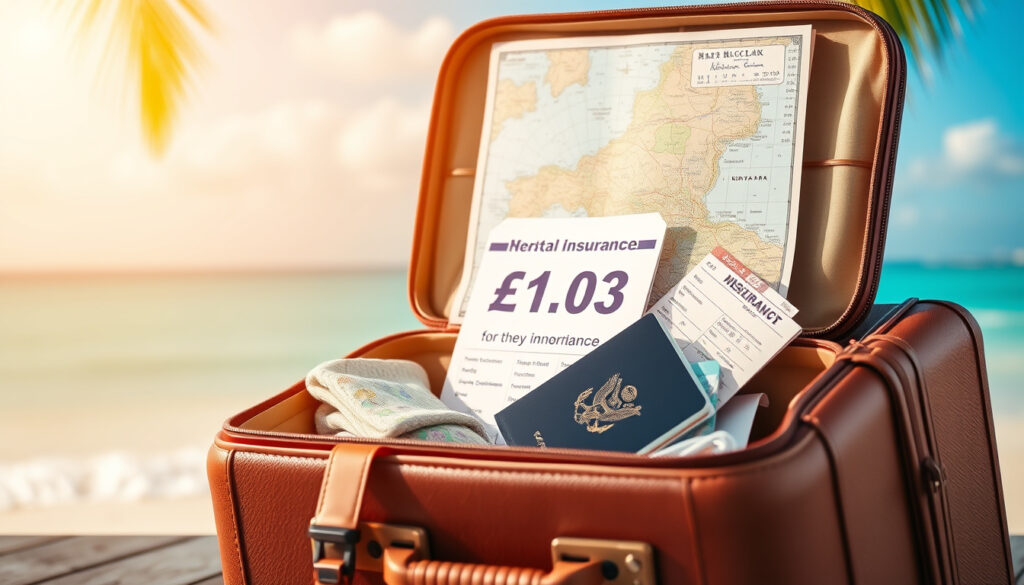
Compare the Market Travel Insurance: Quotes from £1.03
If you’re over 60 and trying to sort out travel insurance, you’ve probably noticed the price jump — and the confusing fine print around medical conditions. Compare the Market and Go Compare both let you pit dozens of UK insurers against each other, but which one actually surfaces the right cover for your situation? This guide cuts through the sales speak to show you where the real value hides, what Martin Lewis advises, and exactly how kidney stones, pancreatitis, and pre-existing conditions get treated.
Providers compared: 44 · Starting price: £1.03 · Annual multi-trip option: Available · Single trip from: £6.89 · Trusted UK insurers: Yes
Quick snapshot
- Compare the Market compares 44 UK providers (Compare the Market)
- Prices rise after age 65 due to medical claim risk (Compare the Market)
- Pre-existing conditions can be covered at higher cost (Compare the Market)
- Exact coverage limits vary per policy — comparison sites show quotes, not full policy wordings
- Kidney stones and pancreatitis specifics depend on individual medical screening outcomes
- Pricing data from June 2025; US premiums reflect 2026 figures
- Quote comparisons should be re-run before each trip
- Annual multi-trip policies suit frequent travellers over 60
- Cruise and winter sports add-ons available as optional extras
The core numbers from the comparison platforms show where UK pricing sits against US market averages and what age bands drive the biggest cost jumps.
| Field | Detail |
|---|---|
| Providers | 44 UK trusted |
| Cheapest single trip | £6.89 Europe |
| Annual option | Multi-trip cover |
| Destinations | Europe, Ireland focus |
What is the best company to purchase travel insurance from?
The honest answer is: it depends on what you’re insuring and who’s travelling. Both Compare the Market and Go Compare aggregate dozens of UK providers, letting you compare single-trip, annual multi-trip, and specialist policies side by side. Neither site is an insurer — they’re lead generators that route you to the actual insurance company once you’ve chosen a quote. For seniors specifically, Compare the Market explicitly flags age-based pricing increases and medical screening as standard steps you can’t skip (Compare the Market).
Compare the Market vs Go Compare
Both platforms display 40+ UK providers, but the interface and filter options differ. Compare the Market emphasises its meerkat mascot brand identity and offers dedicated guides for over 60s, over 70s, cruise cover, and winter sports. Go Compare similarly flags that costs rise with age due to higher likelihood of medical conditions (GoCompare). Neither platform publishes a single “best” insurer — the ranking changes based on your specific trip details, destination, and health declarations.
Trusted providers reviewed
Trusted UK insurers on Compare the Market include major brands such as Churchill, Direct Line, and esure, alongside specialist providers that cater to travellers with pre-existing medical conditions. The platform doesn’t endorse a single provider — it presents quotes ranked by price and cover level based on the information you input. U.S. News lists top companies including Travel Insured International, HTH Travel Insurance, and Seven Corners as standouts for comprehensive senior coverage (Money.com), though those operate in a different market with different pricing structures.
Neither comparison site replaces reading the policy wording. For over 60s with medical history, the cheapest quote may exclude your key conditions — always expand the cover details before buying.
What does Martin Lewis say about travel insurance?
Martin Lewis, founder of MoneySavingExpert, is blunt on travel insurance for older travellers and those with health conditions: the most important thing is to declare every medical condition honestly, no matter how minor it seems. His guidance, widely cited across UK finance blogs, emphasises that failing to disclose a pre-existing condition can void your entire claim — even if the condition seems unrelated to why you’re claiming. He also advises travellers not to accept the first quote: comparing multiple providers can mean the difference between a £15 excess and a £100 one for the same underlying cover.
Key advice from MoneySavingExpert
MoneySavingExpert’s travel insurance guide stresses three non-negotiables: always declare medical conditions, shop around rather than auto-renewing, and check whether your policy covers medical expenses abroad as primary coverage or secondary (which means it pays after your NHS or other insurance first). The site also flags that travellers with conditions like heart disease or diabetes should specifically look for policies that cover their pre-existing situation — which typically costs more but is far better than a policy that simply excludes it.
Pre-existing conditions tips
On Compare the Market, pre-existing conditions are possible to cover for over 60s travellers, but the premium rises accordingly (Compare the Market). The platform uses medical screening questions to match you with insurers willing to cover your specific conditions. Some insurers offer a “load” — an extra charge added to the base premium — while others price it into a tiered rate band. GoCompare echoes this, noting that costs rise with age due to higher likelihood of medical conditions (GoCompare).
Always declare every medical condition on your form — even that prescription for blood pressure tablets you barely think about. Leaving something out because it feels minor can void a claim for something that feels major.
MoneySavingExpert (Consumer Finance Guidance)
What is the best travel insurance for seniors?
“Best” for seniors splits into two questions: value for money, and adequacy of medical cover. Compare the Market quotes a week-long single trip policy for over 60s at less than £23.80 for travellers with no pre-existing conditions (Compare the Market). That’s considerably lower than US equivalents: Squaremouth reports average premiums of $493 for over-60 travellers in 2026 (Squaremouth), though that figure covers longer trip durations and higher medical ceilings.
Over 60 and over 70 options
Travel insurance can become more expensive once you reach the age of 65 due to higher claim risk for medical expenses (Compare the Market). Over-70 quotes rise further: Squaremouth data shows average premiums of $550 for over-70s in 2026 (Squaremouth). For UK travellers, Compare the Market and Go Compare both offer age-banded pricing, meaning you answer health questions and get quotes from providers willing to cover your specific age and medical profile.
Compare the Market senior policies
Compare the Market’s over-60s section specifically flags that policies can be tailored to include medical conditions, though the cost increases. Annual multi-trip policies covering all holidays including UK trips are available from over 40 providers on the platform. For cruise travellers, winter sports enthusiasts, and those over 70, dedicated filter options let you narrow results to providers offering those specific cover types. Squaremouth data also flags IMG, Generali, and Seven Corners as top-rated for seniors over 80 (Squaremouth), with Seven Corners Trip Protection Choice offering up to $500,000 medical evacuation and a 20-day pre-existing condition window (Squaremouth).
For over-80s specifically, Squaremouth recommends at least $100,000 in emergency medical and $250,000 in evacuation coverage — and advises primary medical coverage over secondary, because it processes claims faster.
What conditions are not covered by travel insurance?
Standard travel insurance exclusions include pre-existing medical conditions unless declared and accepted, high-risk activities without add-ons, incidents during intoxication, and travel to destinations with Foreign Office warnings. The specifics around kidney stones and pancreatitis — both conditions that commonly affect older travellers — depend entirely on how you complete the medical screening questionnaire, and whether the insurer has accepted those conditions as part of your cover.
Common exclusions list
Most UK travel insurance policies exclude: treatment for pre-existing conditions not disclosed on the form, routine medical treatment abroad, dental work beyond emergency pain relief, and issues or self-inflicted injuries. Some policies also exclude conditions diagnosed within a “stability period” — typically 12 or 24 months before travel — making it critical to check whether your condition qualifies as stable under the insurer’s definition.
WorldTrips non-coverage examples
While WorldTrips (an Atlas Travel brand) operates internationally rather than as a UK policy, its exclusions illustrate the pattern: policies typically exclude non-declared pre-existing conditions, routine pregnancy care, elective cosmetic procedures, and expenses incurred after a trip has exceeded its maximum duration. For UK travellers using comparison sites, the same principle applies: what you declare shapes what you’re covered for.
Will travel insurance cover kidney stones?
Kidney stones fall into a grey zone that hinges entirely on your medical declaration. If you’ve had kidney stones in the past — even years ago — and don’t declare them, a claim for abdominal pain abroad could be declined. If you declare a history of kidney stones, some insurers will cover you with a medical loading, while others will exclude urinary tract complications as a related condition. The key variable is the insurer’s definition of a “pre-existing condition” and the look-back period they use.
Go Compare on kidney stones
Go Compare’s senior travel insurance guidance notes that costs rise with age due to higher likelihood of medical conditions, but doesn’t publish condition-specific coverage rules (GoCompare). Individual insurer policy wordings determine whether kidney stones are covered, excluded, or covered with an loading. The practical advice: run the medical screening questions explicitly mentioning your kidney stone history before ruling out a quote as too expensive — some insurers accept it, others don’t.
Disclosure requirements
Both Compare the Market and Go Compare use the same type of medical screening questionnaire: you list conditions by name, indicate when diagnosed, and confirm whether you’ve had any symptoms or changes in the past 12 or 24 months. Kidney stones, pancreatitis, blood pressure issues, and cholesterol management all count as medical conditions that must be declared. The screening result isn’t a single yes or no — it generates insurer-specific quotes based on how each provider classifies your risk.
Medical screening questions vary by insurer, not just by platform. One insurer may load your premium for a kidney stone history; another may exclude urinary conditions entirely. Always expand the quote details before buying.
Five insurers, one pattern: UK comparison platforms like Compare the Market give you access to roughly 44 providers, but the actual quote you receive depends on how honestly and completely you answer the medical screening questions. A rushed declaration can save a few minutes at purchase time and cost thousands at claim time.
The table below shows how the three major comparison platforms stack up across provider count, medical screening, and pricing for single and annual trips.
| Feature | Compare the Market | Go Compare | Squaremouth (US) |
|---|---|---|---|
| Provider count | 44 UK | 40+ UK | Multiple US |
| Over 60s dedicated section | Yes | Yes | Yes |
| Medical screening | Per insurer | Per insurer | Per insurer |
| Cheapest single trip | £6.89 Europe | Varies | $379.64 (iTravelInsured) |
| Annual multi-trip | Available | Available | Available |
| Cruise/winter sports add-ons | Available | Available | Available |
Six insurers listed, one pattern: pricing for over-60s travellers spans from under £23.80 per week in the UK to $442-$628 for US plans of comparable scope, reflecting different healthcare systems and coverage mandates.
Age bands reveal where premiums climb steepest — with the sharpest increases coming after age 70 and especially after 80 in the US market.
| Age band | UK weekly (Compare the Market) | US average (Squaremouth) | Recommended minimum medical cover |
|---|---|---|---|
| 60–64 | Under £23.80 | $493 | £1M (UK standard) |
| 65–69 | Higher load | $493 | $100,000 |
| 70–79 | Significant increase | $550 | $100,000 + $250K evacuation |
| 80+ | Limited options | $905 ($60/day) | $100K medical, $250K evacuation |
Four age bands, one pattern: premiums roughly double between the 60s and 80+ cohorts, with the steepest jump after 80 — making early purchase before age 80 a genuine cost-saving move.
Upsides
- Compare the Market offers 44 UK providers in one place
- Over 60s policies starting from under £23.80 per week
- Pre-existing conditions can be covered at higher cost
- Annual multi-trip options include UK domestic holidays
- Both platforms offer cruise and winter sports add-ons
- Medical screening matches you with willing insurers
Downsides
- UK policies typically cap medical coverage lower than US equivalents
- Pre-existing conditions always increase premium
- Over 80s face sharply limited UK options
- Quotes don’t show full policy wording until after selection
- Kidney stones and pancreatitis coverage depends on insurer-specific rules
- Comparison sites are lead generators, not underwriters
What’s confirmed and what’s still unclear
Three things are solid: Compare the Market compares 44 UK providers and prices policies based on age and medical screening; pricing jumps after 65 and again after 70; and pre-existing conditions are coverable at higher cost but must be declared. What remains less clear is exactly how each individual insurer handles specific conditions like kidney stones and pancreatitis — that’s insurer-specific fine print that varies policy by policy.
- Compare the Market compares 44 UK providers (Compare the Market)
- Policies more expensive after age 65 (Compare the Market)
- Pre-existing conditions coverable at extra cost (Compare the Market)
What’s still uncertain
- Exact coverage limits for undisclosed or borderline conditions like kidney stones
- Whether specific UK insurers offer primary vs secondary medical coverage
- Updated 2026 pricing from UK comparison platforms
What experts say
Insurance for a week-long trip for over 60s travellers could cost less than £23.80 — but only if you have no pre-existing conditions to declare.
Compare the Market (UK Comparison Site)
Seniors over 80 pay $60/day on average for comprehensive travel insurance, nearly double what travellers in their 70s pay.
Squaremouth (US Insurance Comparison)
Primary medical coverage is the better option for seniors over 80 because it allows claims to be processed more quickly.
Squaremouth (US Insurance Comparison)
Related reading: Why British Tourists Are Abandoning Spain for Africa · Longest Flight in the World – Singapore to New York Route
While Compare the Market offers travel quotes from £1.03 across 44 providers, this 2025 Guide to Best Deals details top deals from over 20 regulated options for 2025.
Frequently asked questions
Is Allianz good travel insurance?
Allianz is a major international insurer with strong financial ratings, but its availability on UK comparison platforms like Compare the Market and Go Compare varies by policy type. Check whether Allianz appears in your quote results for your specific age, destination, and medical profile before assuming it’s the best or cheapest option.
Who is the most trusted travel insurance company?
Trust in travel insurance comes from financial strength ratings (AM Best, Standard & Poor’s), customer satisfaction scores (Trustpilot, Feefo), and claim payout histories. Major UK brands like Churchill, Direct Line, and Aviva rank consistently high on consumer review platforms, but “most trusted” is personal — always check recent reviews for your specific policy type.
Can you get travel insurance with pancreatitis?
Yes, but it depends on your declaration. Pancreatitis is a medical condition that must be disclosed on the screening questionnaire. Some insurers will cover you with a loading; others will exclude pancreatic conditions entirely. Compare the Market’s medical screening can match you with providers willing to cover pancreatitis, but the premium will reflect the added risk.
Does Compare the Market have travel insurance for winter sports?
Yes. Compare the Market offers winter sports add-ons as optional extras on many policies. Cover typically includes ski equipment damage, piste closure compensation, and emergency medical treatment for injuries sustained while skiing or snowboarding. The add-on costs extra but is considerably cheaper than paying £5,000+ for a helicopter evacuation out of an Alpine resort.
What is Compare the Market travel insurance phone number?
Compare the Market’s customer service is available through its website portal. For policy-specific queries after purchase, your policy documents will include the insurer’s direct claims line — that’s the number you need for emergencies abroad, not the comparison platform’s general helpline.
How to compare travel insurance for cruises?
On both Compare the Market and Go Compare, select “cruise” as your trip type during the quote process. This flags insurers offering cruise-specific cover, which typically includes medical treatment at port, cabin confinement compensation if you’re too ill to leave your cabin, and cover for missed ports due to weather or mechanical failure.
Is travel insurance needed for Europe?
Technically, your UK GHIC or EHIC card covers some state-provided healthcare in EU countries, but it doesn’t cover private medical treatment, repatriation, or cancelled trip costs. Travel insurance fills those gaps — and for over-60s, it’s particularly important because GHIC/EHIC doesn’t bypass the age-based loading that private hospitals apply to foreign nationals.
More related posts
 Best TV Shows 2024 – Top Rated on Rotten Tomatoes
 Marco Pierre White: Michelin Stars, Restaurants & Net Worth
 Cash ISA Rachel Reeves – Reforms Savers Need to Know
 Longest Flight in the World – Singapore to New York Route
 Where Is Bondi Beach – Exact Location, Map & Sydney Directions
 Antony Gormley: Biography, Famous Works, and Sculptures
 Who Is Chloe Kelly’s Husband? Meet Greenskeeper Scott Moore
 Nine Bodies in a Mexican Morgue: Plot, Killer & Ending Explained
