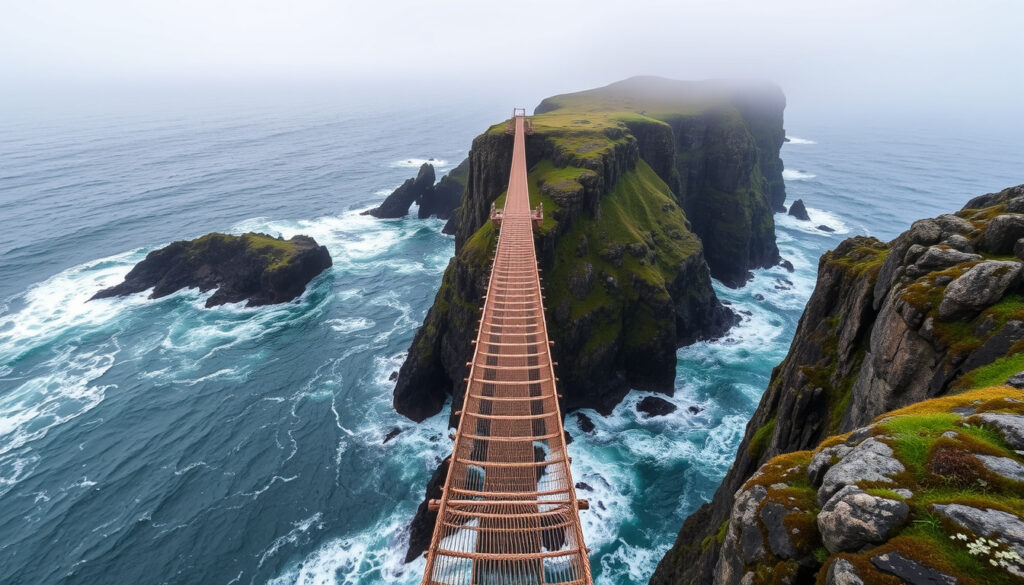
Carrick-a-Rede Rope Bridge – Height, Tickets & Opening Times
Carrick-a-Rede Rope Bridge draws hundreds of thousands of visitors each year to the dramatic coastline of County Antrim. The swaying footbridge connects the mainland to a tiny island perched above the Atlantic Ocean, offering one of Northern Ireland’s most memorable outdoor experiences. For those planning a visit along the Causeway Coastal Route, understanding the practical details—height, tickets, opening times, and access—can make the difference between a smooth trip and a disappointing turned-away experience.
Suspended nearly 30 meters above churning seas and jagged rocks, the bridge has evolved from a functional tool of the fishing trade into a symbol of Northern Ireland’s natural heritage. Today it sits under the stewardship of the National Trust, which manages visitor flow and maintains the structure to accommodate growing tourism interest. The site remains weather-dependent, however, meaning conditions on the day can alter plans significantly.
What Is Carrick-a-Rede Rope Bridge?
Carrick-a-Rede Rope Bridge spans 20 metres across a gaping chasm, linking the County Antrim mainland to the small island of Carrickarede near Ballintoy. The name derives from the Irish “Carraig a’ Ráid,” interpreted as “the rock of the casting”—referring to the obstacle salmon once faced when attempting to swim upstream past this point on their journey to birth rivers.
County Antrim, Northern Ireland
30m (100ft) above Atlantic
20m (65ft)
National Trust
The bridge was originally constructed around 1755 by salmon fishermen who needed reliable access to the island for netting migratory fish. The early versions featured only a single handrail, making crossings considerably more precarious than the modern structure allows. The current wire rope and Douglas fir version, crafted by Heyn Construction in Belfast, was installed in 2008 at a cost exceeding £16,000.
Key insights for visitors:
- Nearly half a million people crossed the bridge in 2018 alone, reflecting its status as one of Northern Ireland’s most visited attractions
- Pre-booking is mandatory during peak season, with tickets frequently selling out weeks in advance during summer months
- National Trust Members and Neighbour Pass Holders enter free but must still reserve a time slot online
- A staff member accompanies each crossing to manage bridge sway and ensure visitor safety
- The site includes the Weighbridge Tearoom and a gift shop featuring local crafts
- The nearby Giants Causeway lies just a 10-15 minute drive away, making the two attractions easily combinable
| Fact | Detail |
|---|---|
| Originally built | 1750s by salmon fishermen |
| Annual visitors | 400,000+ (485,736 in 2018) |
| Crossing time | 1-2 minutes |
| Current structure installed | 2008 by Heyn Construction |
| Adult ticket price | £14-£15 (per recent records) |
| Salmon fishery status | No longer operational |
Where Is Carrick-a-Rede Rope Bridge and How to Get There?
The bridge sits on the North Antrim coastline, approximately 10-15 minutes’ drive from the Giants Causeway along the celebrated Causeway Coastal Route. The full address is 119a Whitepark Road, Ballintoy, BT54 6LS. This position places Carrick-a-Rede squarely within one of Northern Ireland’s most scenic stretches of road, frequented by road-trippers and tour groups alike.
Reaching the Site
Visitors traveling from Belfast will find the drive takes roughly two hours via the A44 and A2 coastal roads, though traffic and road conditions can extend this travel time. No direct public transport serves the site specifically, making self-drive or organized tours the most practical options for most visitors. Those without vehicles should research tour operators who bundle Carrick-a-Rede with Giants Causeway visits.
The Coastal Walk to the Bridge
Once parked at the dedicated car park, visitors follow a 1-kilometre coastal path across grasslands and rocky terrain before reaching the bridge. The route includes steep sections and steps, with cliff edges requiring careful attention throughout the walk. The path offers striking views of the surrounding coastline, seabirds nesting on the cliffs below, and on clear days, sights of Scottish islands on the horizon.
The approach involves uneven ground, exposed hillside, and sustained elevation changes. Comfortable walking shoes with good grip are strongly recommended. The route is unsuitable for prams or pushchairs.
Carrick-a-Rede Rope Bridge Height, Safety, and Visitor Experience
The bridge hangs 30 metres—roughly equivalent to a ten-storey building—above the rocks and sea below. The 20-metre crossing takes just one to two minutes on foot, though the sensation of movement beneath one’s feet can make those minutes feel considerably longer for some visitors.
The Thrill Factor
Many visitors describe the experience as thrilling, with the gentle sway of the bridge and the dizzying view combining to create a memorable adrenaline moment. Some find it genuinely frightening. There are documented instances of visitors being unable to complete the return crossing, occasionally requiring evacuation by boat from the island side. A trained staff member accompanies each group specifically to manage the bridge’s movement and respond to any difficulties.
Look across toward the island rather than down at the sea below. Keep a steady pace and hold the handrails firmly. Staff are trained to assist anxious crossers and will slow the flow if needed.
What Visitors Can See
The vantage point from Carrickarede island offers panoramic coastal scenery that rewards those who complete the crossing. On favourable days, views extend toward the Scottish islands visible on the horizon. Below, seabirds wheel and dive among the cliff faces, and occasional basking sharks have been spotted in the waters beneath. Sea caverns carved into the rocks below add to the dramatic landscape.
Accessibility Considerations
Full accessibility to the bridge itself is not possible. The first 500 metres of the coastal path are accessible, and a telescope near the start allows those with mobility limitations to view the bridge and coastline. A manual wheelchair is available on a first-come, first-served basis from the Tearoom—reservations cannot be made in advance. Sensory bags can be collected from the Booking Hut for visitors who may benefit from sensory support tools.
Dogs on leads are welcome on the coastal path but are not permitted on the bridge itself. Visitors with dogs should plan accordingly and consider whether a companion can wait at the path’s end while others cross.
High winds can trigger temporary closures regardless of season. A visit during spring or autumn may offer a better balance of smaller crowds and more stable conditions, though weather along this exposed coast remains unpredictable year-round.
Carrick-a-Rede Rope Bridge Opening Times and Tickets
The site has operated year-round since 2009, though weather closures remain possible in any month. As a general rule, the bridge remains open unless sustained high winds or storm conditions create unsafe crossing conditions. No specific closure data for 2024 or 2026 has been published beyond the standard weather-dependent policy.
Booking Requirements
Online pre-booking is mandatory for all visitors intending to cross the bridge. Ticket sales close one hour before the allocated time slot, making last-minute walk-up attempts unreliable, particularly during busy summer periods. The National Trust website manages all bookings directly, and visitors are advised to check availability well in advance of planned travel dates.
Current Pricing
Adult tickets have been priced between £14 and £15 according to recent records. National Trust Members and holders of Neighbour Passes cross free of charge but must still secure a booking slot through the website. The ticket price covers bridge crossing, use of site facilities, and access to guided walks and talks offered during the visit.
Children’s pricing, family tickets, and group rates should be confirmed directly on the National Trust booking page before planning, as pricing structures may be updated.
History of Carrick-a-Rede Rope Bridge
The bridge’s origins trace to the mid-18th century, when local salmon fishermen constructed the first rudimentary crossing to reach their nets on Carrickarede island. Migrating salmon traveling northward along the coast encountered this rock formation, making the surrounding waters a productive fishing location. The name itself reflects this heritage, with “Carraig a’ Ráid” translating to the rock where fishermen cast their nets.
Timeline of Key Developments
- 1755 (approximately): Salmon fishermen build the original crossing to access netting sites on the island
- 18th-20th centuries: The bridge serves the fishing community throughout the salmon industry’s peak years
- 1970s: The National Trust assumes ownership and management of the site
- 2004: A safer bridge structure replaces earlier versions, improving visitor access
- 2008: Heyn Construction of Belfast installs the current Douglas fir and wire rope structure at a cost exceeding £16,000
- 2009: Year-round public access begins
- Present: Guided 1km walks evoke the fishing heritage; the salmon fishery itself no longer operates
The salmon fishery that gave rise to the bridge has long since ceased operations, though guided walks now recount this chapter of local history for interested visitors. The National Trust’s historical resources provide further context for those wanting deeper insight into the site’s maritime past.
What Is Clear and What Remains Uncertain
| Established Information | Areas of Uncertainty |
|---|---|
| Bridge length: 20 metres | Current 2026 ticket pricing has not been independently verified beyond the £14-15 range from recent records |
| Bridge height: approximately 30 metres above sea level | Specific weather closure frequency or patterns are not publicly documented |
| Original construction date: around 1755 | Precise maintenance schedules and upcoming structural work are not published |
| Current structure installed: 2008 | Real-time bridge status cannot be confirmed without checking the National Trust site on the day |
| Pre-booking mandatory during peak season | Visitor numbers for 2024 have not been released at time of writing |
| National Trust manages the site | Specific crowd management protocols during peak hours are not publicly detailed |
Why Carrick-a-Rede Matters
Carrick-a-Rede occupies a distinctive place in Northern Ireland’s tourism landscape, combining natural drama with historical depth. The site exemplifies how working coastal infrastructure from centuries past has been repurposed for contemporary leisure, demonstrating the interplay between human activity and landscape that characterises much of the Antrim coastline.
The area forms part of the Causeway Coast, a region recognised internationally for its geological significance and scenic beauty. The nearby Giants Causeway receives even greater visitor numbers, and the proximity of the two National Trust sites has shaped regional tourism planning significantly. Walking the coastal path toward the bridge, visitors encounter the same raw Atlantic exposure that shaped local communities for generations.
The bridge also features in popular culture references, including its appearance as a filming location in certain television productions. This cultural visibility has reinforced its status as a must-see destination for visitors to Northern Ireland, contributing to the sustained growth in annual visitor numbers over the past two decades.
Sources and Expert Perspectives
Information about Carrick-a-Rede Rope Bridge comes primarily from two authoritative sources. The National Trust, as the managing organisation, provides official operational details including booking procedures, opening policies, and historical background. The Wikipedia entry draws on multiple citations to document the bridge’s construction history, dimensions, and visitor statistics.
“Originally built around 1755 by salmon fishermen, the bridge’s name derives from Irish Carraig a’ Ráid, meaning ‘rock of the casting’—an obstacle for salmon returning to their birth rivers.”
— National Trust, History at Carrick-a-Rede
“A staff member accompanies each crossing to manage the bridge sway for safety.”
— Visitor information, Wikipedia
Final Thoughts
Carrick-a-Rede Rope Bridge offers a straightforward proposition: cross a swaying footbridge suspended above the Atlantic and be rewarded with dramatic coastal views and a tangible connection to Northern Ireland’s fishing heritage. The practicalities—pre-booking, appropriate clothing, a reasonable fitness level for the approach walk—require attention, but the experience itself remains accessible to most visitors willing to plan ahead. Those continuing along the Causeway Coastal Route will find the bridge pairs naturally with Giants Causeway and the other coastal attractions that make this stretch of coastline worth travelling for.
The Marine Hotel North Berwick and Hotels Near Tottenham Stadium represent accommodation options elsewhere in the UK, though visitors to Northern Ireland will find local hospitality options closer to County Antrim.
Frequently Asked Questions
What is the best time to visit Carrick-a-Rede Rope Bridge?
Spring and autumn typically offer smaller crowds and more stable weather conditions than the busy summer months. Weekdays generally see fewer visitors than weekends.
What is the length of Carrick-a-Rede Rope Bridge?
The bridge spans 20 metres (approximately 66 feet) across a chasm connecting the mainland to Carrickarede island.
Can I visit without pre-booking?
Pre-booking is mandatory for bridge crossings, particularly during peak season when tickets frequently sell out. Walk-up visits without bookings are unlikely to secure crossing slots.
Is Carrick-a-Rede Rope Bridge wheelchair accessible?
The coastal path is accessible for the first 500 metres with a telescope available. A manual wheelchair can be borrowed from the Tearoom on a first-come basis. The bridge itself is not accessible to wheelchair users.
How scary is crossing the bridge?
Reactions vary significantly. Many visitors find the gentle sway thrilling, while others experience genuine anxiety. Staff members accompany each crossing to manage safety and assist anyone struggling. Looking toward the island rather than down can help manage the sensation.
Are dogs allowed at Carrick-a-Rede?
Dogs on leads are welcome on the coastal approach path but cannot cross the bridge. Owners should arrange for someone to wait with pets during the crossing.
What happens if the bridge closes due to weather?
High winds or storm conditions can trigger temporary closures at any time of year. Checking the National Trust website on the day of intended visit is the most reliable way to confirm current status.
More related posts
 Gaming Realms Share Price – Current Levels and Key Metrics
 Best TV Shows 2024 – Top Rated on Rotten Tomatoes
 David Harbour Movie and TV Show : Full Guide
 State Pension Retirement Age: UK and Ireland Guide (2024)
 Cho Chang: Biography, Actress Katie Leung, Controversies
 Year 2 Common Exception Words: Full List & Teaching Tips
 Body Mass Index Calculator: BMI Formula and Healthy Ranges
 Taylor Fritz: Tennis Career, Family, and Fatherhood
