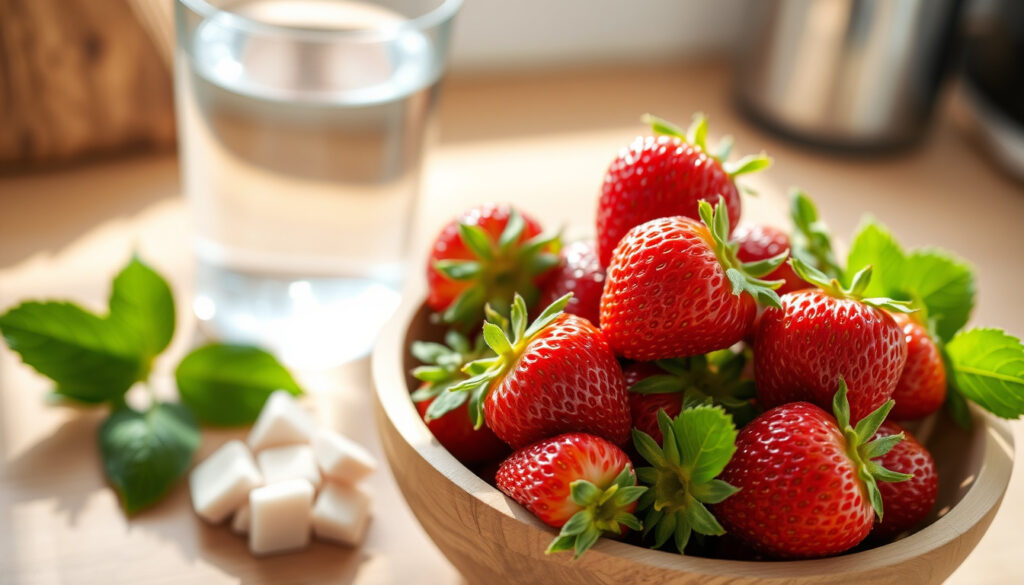
Are Strawberries Good for You? Benefits, Sugar, and More
If you’ve ever stood in the produce aisle wondering whether that pint of strawberries is a smart buy or just a sugary indulgence, you’re not alone. Strawberries carry a reputation as a treat, but the evidence stacks up differently: they are low in calories, packed with vitamin C and fiber, and have a surprisingly gentle effect on blood sugar — making them one of the more balanced fruits you can eat.
Calories per cup (whole): 53 · Vitamin C per cup: 98% DV · Fiber per cup: 3 g · Sugar per cup: 7 g
Quick snapshot
- Strawberries are a good source of vitamin C, fiber, and antioxidants (UF/IFAS Extension, University of Florida research)
- Regular consumption may support heart health and blood pressure (Harvard Health Publishing, Harvard Medical School)
- Strawberries have a low glycemic index (~40) and are safe for most diabetics in moderation (FoodStruct, nutrition comparison database)
- Whether organic strawberries are significantly healthier than conventional — pesticide levels differ but long-term health impact is still debated (University of Utah Health, academic medical center)
- Exact optimal daily serving for maximum health benefit — most studies use 1 cup but no universal dose established (University of Utah Health, academic medical center)
- Effectiveness for weight loss without an overall calorie deficit — strawberries can help with satiety but are not a standalone solution (University of Utah Health, academic medical center)
- Recent clinical trials show strawberry interventions reducing systolic blood pressure in postmenopausal women over 8 weeks (PubMed Central review, peer-reviewed research)
- Harvard cohort data suggests women who ate three or more servings of berries per week had a 34% lower heart attack risk (Harvard Health Publishing)
- Controlled long-term trials comparing strawberry intake against other fruits for cardiovascular endpoints are needed to confirm observational benefits (PMC review)
- Research into optimal serving size and timing for blood sugar regulation is ongoing (PMC review)
Five key numbers that define strawberries’ nutritional profile, one pattern: they deliver high vitamin C and low calorie density in a naturally sweet package.
| Nutrient | Per 100 g |
|---|---|
| Calories | 32 kcal |
| Vitamin C | 58.8 mg (98% DV) |
| Fiber | 2.0 g |
| Sugar | 4.9 g |
| Potassium | 153 mg |
How many strawberries should you eat in a day?
How often should you eat strawberries?
The USDA recommends 1.5–2 cups of fruit per day for adults, and strawberries fit easily into that target. The threshold for heart benefits appears at three or more servings of berries per week — about half a cup each — according to a Harvard Health analysis of women’s health data (Harvard Health Publishing, Harvard Medical School’s consumer health arm). “Berries do not need to be eaten in one sitting to fit into a healthy diet,” notes the University of Utah Health team (University of Utah Health, academic medical center).
What is a standard serving size of strawberries?
One cup of whole strawberries — about eight medium berries — is the standard serving. That cup delivers 53 calories, 3 g of fiber, and 7 g of natural sugar, making it a low-energy-density choice (UF/IFAS Extension, University of Florida research). Eating 1–2 servings per day is considered safe and beneficial for most people.
The implication: one cup gives you a solid nutrient punch without calorie overload, making strawberries an easy fit for daily fruit goals.
What is healthier, blueberries or strawberries?
Which has more vitamin C?
Strawberries are the clear winner: one cup provides 98% of the Daily Value for vitamin C, compared to blueberries’ 24% (UF/IFAS Extension). That alone makes strawberries a stronger choice for immune support and skin health.
Which has more antioxidants?
Both are antioxidant-rich, but the types differ. Blueberries are higher in anthocyanins, which are linked to improved endothelial function and lower blood pressure (Harvard Health Publishing). Strawberries are richer in ellagic acid and flavonoids. A 2022 PMC review of intervention studies found strawberry interventions consistently improved blood pressure and arterial stiffness in postmenopausal women, while blueberry trials showed mixed results — three of four trials showed no significant effect on cardiovascular markers (PubMed Central review, peer-reviewed research).
Which is lower in sugar?
Strawberries contain about 7 g of sugar per cup, while blueberries have 15 g per cup (UF/IFAS Extension). Strawberries also have a lower glycemic index (~40) than blueberries (~53) (FoodStruct, nutrition comparison database). So for blood sugar management, strawberries are the better pick.
Three attributes, one pattern: strawberries win on vitamin C and sugar content, blueberries win on unique anthocyanins. The choice depends on your priority — immunity and blood sugar control lean strawberry, long-term vascular health may benefit from both.
For a typical American looking to cut added sugar while still getting a sweet fruit, strawberries are the stronger everyday choice. But if you want the highest anthocyanin load for blood vessel elasticity, don’t skip blueberries entirely — rotate them in a few times a week.
What are the pros and cons of eating strawberries?
Pros: heart health, blood pressure, skin, immunity
- Rich in vitamin C — 98% DV per cup — which supports immune function and collagen production for skin (UF/IFAS Extension)
- Contain ellagic acid and flavonoids that may reduce oxidative stress (Harvard Health Publishing)
- Potassium (233 mg per cup) supports healthy blood pressure (University of Utah Health)
- Fiber content (3 g per cup) aids digestion and satiety
Cons: sugar content, pesticide residue, allergic reactions
- Natural sugar (7 g per cup) is moderate but still a consideration for strict low-carb diets
- Regular strawberries often test high for pesticide residues — the Environmental Working Group consistently lists them on the “Dirty Dozen.” Washing thoroughly reduces but does not eliminate residue. (University of Utah Health)
- Allergic reactions, though rare, occur in people sensitive to birch pollen or who have oral allergy syndrome
The pattern: strawberries offer strong upsides for heart and immune health, but the pesticide concern on conventional fruit means washing or choosing organic is a practical step.
Upsides
- Excellent vitamin C source
- Heart and blood pressure support
- Low glycemic impact
- Hydrating and low calorie
- Versatile for meals and snacks
Downsides
- Pesticide residue on conventional fruit
- Natural sugar still counts toward daily limit
- Potential allergen for some individuals
- Perishable — short shelf life
Are strawberries high in sugar?
How much sugar is in a strawberry?
One cup of whole strawberries contains about 7 g of sugar — that’s less than half the sugar in an apple (19 g) and less than a quarter of a banana’s sugar. Per 100 g, strawberries have 4.9 g of sugar (UF/IFAS Extension). To put it in perspective, a single medium strawberry holds just over 1 g of sugar.
Is strawberry sugar bad for you?
No — the sugar in strawberries is natural and comes packaged with fiber, water, and micronutrients that slow its absorption. The fruit has a glycemic index (GI) around 40, which is considered low (FoodStruct, nutrition comparison database). For comparison, white bread has a GI of 75 and watermelon a GI of 72. That low GI means blood sugar rises slowly, making strawberries a fruit that even people with type 2 diabetes can include in moderation.
Strawberries vs other fruits in sugar content
Among common fruits, strawberries are on the low end of the sugar spectrum. Per 100 g: strawberries 4.9 g, blueberries 10 g, apples 10 g, bananas 12 g, grapes 16 g, mangoes 14 g (FoodStruct). This makes strawberries one of the best fruit choices for anyone monitoring sugar intake.
What this means: strawberries deliver sweetness without spiking blood sugar, which is the core reason they beat the sugar stigma.
Can I eat strawberries with high blood pressure?
How do strawberries help blood pressure?
Strawberries contain natural nitrates that the body converts to nitric oxide, a molecule that relaxes and dilates blood vessels. This vasodilation effect helps lower systolic blood pressure. A review of clinical trials published on PubMed Central found that an eight-week strawberry intervention in postmenopausal women led to decreased systolic blood pressure and reduced arterial stiffness (PubMed Central, peer-reviewed research).
Potassium content in strawberries
One cup of strawberries provides about 233 mg of potassium (UF/IFAS Extension). Potassium helps counterbalance sodium, encouraging the kidneys to excrete excess sodium and easing pressure on blood vessel walls. The American Heart Association recommends 3,500–5,000 mg of potassium per day, so a serving of strawberries contributes roughly 5–7% of that target.
Strawberries and heart health
Observational data from Harvard Health showed that women who ate the most blueberries and strawberries were 34% less likely to have a heart attack than those who ate the least (Harvard Health Publishing). The anthocyanins in both fruits are believed to lower blood pressure and make blood vessels more elastic. For people with high blood pressure, adding strawberries to a diet already rich in vegetables and low in sodium can be a practical step.
The catch: while potassium and nitrates in strawberries support blood pressure, anyone on blood thinners or with kidney disease should check with a doctor before increasing intake.
If you take blood thinners or have kidney disease, check with your doctor before greatly increasing potassium-rich foods. For most people with hypertension, however, strawberries are a safe and beneficial addition — the evidence supports about one cup per day.
Research suggests that eating blueberries and strawberries can lower heart disease risk by helping blood vessels relax so blood can flow more smoothly.
University of Utah Health, academic medical center
Women who ate the most blueberries and strawberries were 34% less likely to have suffered a heart attack than women who ate the least.
Harvard Health Publishing, Harvard Medical School
An eight-week strawberry intervention was associated with decreased systolic blood pressure, arterial stiffness, and antioxidant effects in postmenopausal women.
PubMed Central review, peer-reviewed research
For US readers who eat a standard Western diet, the choice is clear: include strawberries as a regular fruit intake, but wash conventionally grown berries thoroughly or opt for organic when possible. The cardiovascular and blood sugar benefits are substantial enough that skipping strawberries because of sugar worries is a missed opportunity — the evidence says they are one of the healthiest fruits you can pick.
Frequently asked questions
Are strawberries good for your eyes?
Strawberries provide vitamin C, which may help protect against age-related macular degeneration and cataracts by reducing oxidative stress in the lens. However, they lack the high levels of lutein and zeaxanthin found in leafy greens and eggs, so they are not a top food for eye health.
Can strawberries help with weight loss?
Yes, because they are low in calories (53 per cup) and high in fiber (3 g), which increases satiety. Replacing higher-calorie snacks with strawberries can support a calorie deficit, but weight loss depends on overall diet and activity.
Are strawberries good for pregnancy?
Yes — strawberries are rich in folate, vitamin C, and fiber, all important during pregnancy. One cup provides about 10% of the RDA for folate. Wash them well to remove pesticide residues, and check with your doctor if you have any food allergies.
Are strawberries good for your teeth?
Vitamin C in strawberries supports gum health by strengthening connective tissue. However, their natural acidity can erode enamel if you eat them frequently without rinsing. It’s best to wait 30 minutes after eating strawberries before brushing your teeth.
Are strawberries good for your stomach?
The fiber in strawberries (both soluble and insoluble) promotes regular bowel movements and feeds beneficial gut bacteria. For most people, strawberries are gentle on the stomach, though some with irritable bowel syndrome may react to the fruit’s fructose content in large amounts.
Are frozen strawberries as nutritious as fresh?
Yes — frozen strawberries are typically picked at peak ripeness and flash-frozen, which preserves most of their vitamin C and antioxidants. In some cases, frozen strawberries may have higher vitamin C levels than fresh berries that have been stored for several days.
More related posts
 Is Cornflour Gluten Free? A Coeliac Guide (Tesco, Aldi, Lidl)
 Cast of Zombies 4 Dawn of the Vampires – Full Cast List
 Aston Martin DBS Superleggera – Full Specs, Price, 0-60 & Review
 State Pension Retirement Age: UK and Ireland Guide (2024)
 BBC Weather Bury St Edmunds – Hourly Forecast and Conditions
 Onitsuka Tiger Mexico 66: Price, History & Why So Expensive
 South Africa vs England Match Scorecard: 304/2 by 146 Runs
 Compare the Market Travel Insurance: Quotes from £1.03
