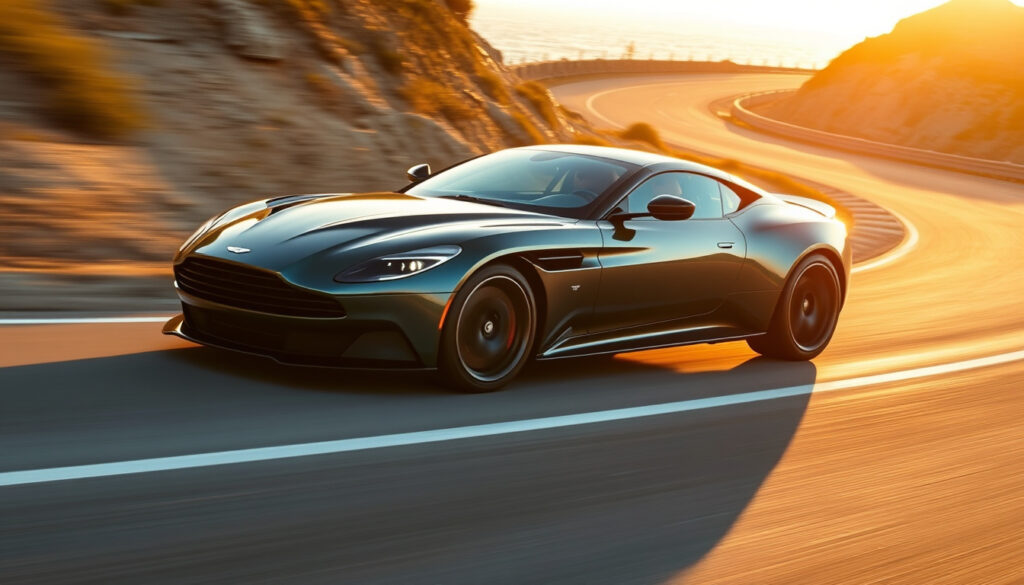
Aston Martin DBS Superleggera – Full Specs, Price, 0-60 & Review
The Aston Martin DBS Superleggera stands as one of the most powerful grand tourers the British marque has ever produced. This front-engine masterpiece combined brutal V12 performance with refined British craftsmanship during its six-year production run from 2018 to 2024. As the spiritual successor to the Vanquish and a step above the DB11, the Superleggera represented Aston Martin’s flagship GT offering before the arrival of the DB12.
Under its long hood sits a thunderous 5.2-liter twin-turbocharged V12 that delivers 715 horsepower and 663 pound-feet of torque. The name “superleggera” references the Italian phrase for “superlight,” though the car tips the scales at nearly 4,100 pounds—a contradiction that critics have noted. Still, the performance figures speak for themselves: 211 miles per hour top speed and a zero-to-sixty time of just 3.2 seconds.
Now discontinued as Aston Martin pivots toward hybrid powertrains and new architectures, the DBS Superleggera has entered the used market where prices have softened considerably from their original MSRP of over $300,000. For those seeking a naturally aspirated V12 grand tourer experience, this era of Aston Martin production has become increasingly sought after.
What is the Aston Martin DBS Superleggera?
The Aston Martin DBS Superleggera is a high-performance grand tourer that occupied the top position in Aston Martin’s lineup during its production years. Introduced in 2018 as the ultimate expression of the DB11 platform, it received extensive mechanical upgrades including a heavily boosted V12 engine producing 84 more horsepower than the DB11 AMR. The “Superleggera” designation pays homage to Touring Superleggera, the Italian coachbuilder that collaborated with Aston Martin on iconic designs of the 1960s.
The model was offered in both coupe and Volante convertible body styles, with the drop-top version maintaining nearly identical performance specifications. Aston Martin positioned the DBS Superleggera between traditional grand tourers and purpose-built supercars, offering everyday usability alongside track-capable dynamics. The car featured a rear-wheel-drive layout with a ZF eight-speed automatic transmission driving the rear wheels.
- Produced from 2018 to 2024 as Aston Martin’s discontinued flagship GT
- Final-drive ratio shortened to 2.93:1 for improved acceleration response
- Carbon-fiber body panels used extensively despite substantial curb weight
- Available in both coupe and Volante convertible configurations
- Succeeded by the DB12 with hybrid-assisted powertrains
- Hand-built at Aston Martin’s Gaydon facility in the United Kingdom
- Ended production with the limited DBS 770 Ultimate variant producing 759 horsepower
Like all Aston Martin models, the DBS Superleggera was hand-assembled at the company’s Warwickshire factory. Each vehicle underwent extensive craftsmanship including hand-finished exterior panels, leather upholstery stitched by skilled artisans, and individual quality control inspections before delivery.
| Specification | Value | Notes |
|---|---|---|
| Engine | 5.2L Twin-Turbo V12 | 712 hp at 6,500 rpm |
| Torque | 663-664 lb-ft | Available at 1,800 rpm |
| Transmission | ZF 8-Speed Automatic | Rear-wheel drive |
| Curb Weight | 1,693-1,907 kg | 3,732-4,204 lbs |
| Length | 4.71 m (185.5-186 in) | Grand tourer proportions |
| Fuel Economy | 17 mpg combined | EPA estimates |
| Cargo Space | 9 cubic feet | 2+2 seating layout |
What are the Key Specifications and Performance Figures?
Engine and Powertrain Details
The beating heart of the DBS Superleggera is its hand-assembled 5.2-liter twin-turbocharged V12 engine. This powerplant produces 715 horsepower at 6,500 revolutions per minute and delivers its substantial 663 to 664 pound-feet of torque starting at just 1,800 rpm. The engine features quad overhead camshafts, 48 valves, and direct fuel injection—technology borrowed from Aston Martin’s racing heritage.
Compared to the DB11 AMR, the DBS received a significant boost increase of 4.4 psi, which accounts for the substantial power advantage. The turbochargers are mounted in the V of the engine for compact packaging and reduced turbo lag. A wet-sump lubrication system ensures stable oil pressure during aggressive cornering, while the exhaust system features active valves that modulate sound based on driving mode selection.
The DBS Superleggera offers three distinct driving modes: GT mode prioritizes comfort for long-distance touring, Sport mode sharpens throttle response and stiffens the suspension, and Sport Plus mode engages the full performance envelope for track use. Each mode adjusts the adaptive dampers, steering weight, exhaust valve position, and transmission shift points.
Chassis and Construction
Despite the “superleggera” (superlight) name, the DBS Superleggera weighs between 3,732 and 4,204 pounds depending on specification. The weight stems from extensive standard equipment, the robust V12 powertrain, and structural reinforcements required for the 2+2 seating configuration. Aston Martin employed carbon-fiber panels for the hood, front fenders, and trunk lid to reduce weight where possible, though the aluminum spaceframe architecture limits the effectiveness of lightweight materials.
The front-engine, rear-wheel-drive layout places the engine behind the front axle for optimal weight distribution. Adaptive dampers at all four corners provide a compliant ride in GT mode while offering sufficient control for aggressive driving. Carbon-ceramic brakes were available as an option, providing substantial stopping power to manage the car’s considerable momentum.
How Fast is the DBS Superleggera?
The Aston Martin DBS Superleggera delivers supercar-baiting performance that places it among the fastest grand tourers ever built. The zero-to-sixty miles per hour sprint takes just 3.2 seconds in the coupe, with the Volante convertible requiring approximately 3.3 seconds due to its reinforced structure. The quarter-mile distance is covered in roughly 11 seconds at speeds exceeding 130 miles per hour.
The top speed of 211 miles per hour (340 kilometers per hour) represents the pinnacle of naturally aspirated and turbocharged grand tourer performance. Real-world testing by multiple publications has confirmed that the car achieves its factory-rated power figures, with dynometer tests showing minimal driveline losses from the transmission and differential.
- Zero to 60 mph: 3.2-3.4 seconds (coupe/cabriolet)
- Zero to 100 mph: 6.4-7.3 seconds
- Quarter-mile: Approximately 11.0 seconds
- Top speed: 211 mph (340 km/h)
- Braking from 70 mph: Approximately 150 feet (with carbon ceramics)
Reviewers consistently praise the linear power delivery and absence of turbo lag despite the twin-turbocharged configuration. The exhaust note—particularly in Sport Plus mode—draws comparisons to supercars, with a spine-tingling V12 symphony that accompanies hard acceleration. The eight-speed automatic transmission shifts quickly and decisively, though enthusiasts seeking manual control can use the steering wheel-mounted paddles.
What is the Price and Availability of the DBS Superleggera?
Original Pricing When New
When the DBS Superleggera was in production, pricing started at approximately $304,995 for the coupe in 2020, with the Volante convertible commanding around $314,186. Higher specification models and the limited DBS 770 Ultimate pushed prices to approximately $335,586 in the United States market. European pricing ranged from €280,500 to €336,570 depending on configuration and market.
These figures positioned the DBS Superleggera above the DB11 V12 and well beyond the V8-powered variants, but below pure supercars from Ferrari and McLaren. The pricing reflected the hand-built nature of the product, the exclusive V12 powertrain, and Aston Martin’s brand positioning as a luxury alternative to mainstream performance vehicles.
Current Used Market Values
As a discontinued model with no 2025 production, the DBS Superleggera has entered the used car market where values have softened considerably from original MSRP. Low-mileage examples can be found for approximately $150,000, representing significant depreciation from the $300,000-plus original prices. The Volante convertible tends to command a slight premium over comparable coupes due to its added versatility.
Owners should budget for specialist Aston Martin service centers, which charge premium rates for maintenance compared to mainstream vehicles. The twin-turbo V12 requires specific expertise, and not all independent mechanics have the diagnostic equipment or parts access necessary for proper service.
Certified pre-owned programs through Aston Martin dealers offer the best combination of remaining warranty coverage and factory inspection standards. Prospective buyers should verify service history carefully, as proper maintenance significantly impacts long-term reliability and performance. The car remains globally available through the used market, with examples in North America, Europe, the Middle East, and Asia.
How Does the DBS Superleggera Compare to Other Models?
DBS Superleggera vs. DB11
The DBS Superleggera builds upon the DB11 platform with substantial mechanical upgrades that justify its positioning as the flagship model. Where the DB11 AMR produces approximately 630 horsepower from its V12, the DBS delivers 715 horsepower—a meaningful 85-horsepower advantage achieved through higher boost pressure and revised engine calibration. The shorter final-drive ratio (2.93:1 versus the DB11’s longer gearing) further improves acceleration response.
Beyond powertrain differences, the DBS features more aggressive aerodynamic tuning, additional carbon-fiber body panels, and a distinctive design language with larger grille openings and reshaped hood vents. The interior receives corresponding upgrades including sportier seat bolstering and exclusive trim options. However, the additional performance comes with trade-offs in ride comfort and everyday usability compared to the more refined DB11.
DBS Superleggera vs. DB12
The DB12 succeeded the DBS Superleggera in 2024, representing Aston Martin’s new direction with electrified powertrains and updated technology. While the DB12 offers V8 and V12 options with hybrid assistance producing up to 671 horsepower, it does not directly replace the DBS with equivalent power output. The DB12 introduces a bonded aluminum architecture, updated infotainment system, and refined dynamics that prioritize overall capability over raw specification.
| Specification | DBS Superleggera | DB11 AMR | DB12 |
|---|---|---|---|
| Power | 715 hp | 630 hp | 671+ hp |
| 0-60 mph | 3.2 seconds | 3.7 seconds | 3.5 seconds |
| Top Speed | 211 mph | 208 mph | 202+ mph |
| Engine Type | Twin-turbo V12 | Twin-turbo V12 | V8/V12 Hybrid |
| Production | 2018-2024 | 2018-2023 | 2024-present |
For enthusiasts specifically seeking the twin-turbo V12 without hybridization, the DBS Superleggera represents the final chapter of a particular era in Aston Martin’s powertrain development. The car occupies a unique position as the most powerful non-hybrid Aston Martin grand tourer produced in recent memory.
Production Timeline
Understanding the production history of the DBS Superleggera provides context for its market position and collector appeal. The model’s six-year production run witnessed several significant milestones that shaped its legacy.
- 2018: DBS Superleggera unveiled at the Geneva Motor Show; production begins later that year
- 2019: First full production year; customer deliveries in full swing
- 2020: Volante convertible variant introduced at additional cost
- 2023: Standard DBS Superleggera production concludes
- 2024: DBS 770 Ultimate limited edition launched with 759 horsepower; all production ends
- 2025: Model fully discontinued; DB12 assumes flagship GT role
The production timeline reveals a relatively brief window for a flagship model, with Aston Martin shifting focus toward the DB12 and electrified future. The DBS 770 Ultimate, released in 2024, marked the pinnacle of the platform’s development with increased power and exclusive content.
What Information is Clear and What Remains Uncertain?
When evaluating the DBS Superleggera, distinguishing established facts from areas of uncertainty helps prospective buyers make informed decisions.
| Established Information | Market Notes |
|---|---|
| 5.2L twin-turbo V12 producing 715 hp at 6,500 rpm | Used values fluctuate based on mileage, condition, and location; $150,000 represents approximate starting point for low-mileage examples |
| Zero to 60 mph in 3.2 seconds (coupe) | Long-term reliability data remains limited in publicly available sources |
| 211 mph top speed (340 km/h) | Actual fuel economy may vary significantly from EPA estimates depending on driving style |
| Produced 2018-2024 at Aston Martin Gaydon facility | Specific production numbers are not widely published |
| Discontinued with no 2025 models | Future collector value trajectory remains speculative |
| ZF 8-speed automatic transmission, rear-wheel drive | Individual ownership experiences vary; specialist service access depends on geographic location |
Historical Context and Market Position
The DBS nameplate carries substantial heritage within Aston Martin’s history. The original DBS debuted in 1967 as a grand touring coupe powered by a straight-six engine, establishing the template for the brand’s flagship models. The Superleggera designation references Touring Superleggera, the legendary Milanese coachbuilder whose aluminum construction techniques influenced sports car design throughout the 1960s.
Within Aston Martin’s modern lineup, the DBS Superleggera occupied the position between the DB11 and the Valkyrie hypercar—a unique space where everyday usability meets extraordinary performance. The car competed against the Ferrari Portofino M, Bentley Continental GT Speed, and Mercedes-AMG GT R, though none offered the same naturally aspirated V12 character.
The discontinuation of the DBS Superleggera marks a turning point for the brand as it embraces hybrid technology in the DB12 and beyond. This transition places the Superleggera firmly in the era of traditional internal combustion flagship grand tourers, making it potentially significant for collectors interested in the final chapter of a particular automotive philosophy.
What Reviewers and Sources Say
Professional automotive publications have offered extensive commentary on the DBS Superleggera since its introduction, with critics generally praising the car’s performance capabilities while noting certain compromises.
“The Aston Martin DBS Superleggera is a super quick grand tourer with shocking acceleration and a spine-tingling V12 exhaust.”
“The linear power delivery and absence of turbo lag makes it brutally fast yet refined for daily use.”
Common criticisms center on the disconnect between the “superleggera” name and the car’s substantial curb weight. Several reviewers noted that the handling, while competent, lacks the agility of purpose-built supercars like the Ferrari 488 GTB. The weight also affects braking performance and tire wear during aggressive driving sessions.
The Volante convertible variant maintains nearly identical performance specifications while offering the unique appeal of open-air grand touring. Owners appreciate the car’s ability to serve as a comfortable daily driver that transforms into a performance machine at the flick of a switch.
The DBS Superleggera earned recognition as one of the finest grand tourers of its generation, with particular praise for the theatrical exhaust character and effortless high-speed stability. Enthusiasts seeking the character of a traditional V12 grand tourer with supercar acceleration found much to admire in Aston Martin’s flagship offering.
Summary and Final Thoughts
The Aston Martin DBS Superleggera represents a compelling chapter in the history of British grand touring automobiles. With its twin-turbocharged V12 producing 715 horsepower, sub-four-second acceleration, and a top speed exceeding 200 miles per hour, it delivers supercar performance wrapped in a hand-crafted grand touring package. The discontinuation in 2024, following the final DBS 770 Ultimate edition, marks the end of an era as Aston Martin pivots toward hybridized powertrains in its modern lineup.
For prospective buyers, the used market offers an opportunity to acquire this V12 flagship at prices significantly below original MSRP. While maintenance costs remain high and require specialist attention, the driving experience combines everyday usability with occasional theatrical brilliance. The car’s position within Aston Martin’s lineage, combined with its naturally aspirated character (despite twin turbos), makes it distinctive among contemporary performance vehicles. Those considering a purchase should verify service history thoroughly and budget accordingly for the specialized care this British thoroughbred requires.
Frequently Asked Questions
What do reviews say about the Aston Martin DBS Superleggera?
Reviews praise the car’s shocking acceleration, spine-tingling V12 exhaust note, and refined daily usability. Criticisms include the substantial weight that undermines the “superleggera” name and handling less agile than pure supercars.
How much horsepower does the DBS Superleggera have?
The 5.2-liter twin-turbo V12 produces 715 horsepower at 6,500 rpm and 663-664 lb-ft of torque starting at 1,800 rpm.
Is the Aston Martin DBS Superleggera still in production?
No. Production ended in 2024 with the DBS 770 Ultimate limited edition. The model was fully discontinued with no 2025 models, succeeded by the DB12.
What is the 0-60 time of the DBS Superleggera?
The coupe accelerates from 0-60 mph in approximately 3.2 seconds, while the Volante convertible requires roughly 3.3 seconds.
What is the top speed of the Aston Martin DBS Superleggera?
The top speed is 211 miles per hour (340 km/h), making it one of the fastest production grand tourers ever built.
How does the DBS Superleggera compare to the DB11?
The DBS produces 715 hp compared to the DB11 AMR’s 630 hp, features a shorter final-drive ratio for better acceleration, and includes more aggressive styling and carbon-fiber panels.
Where can I buy a used Aston Martin DBS Superleggera?
Certified pre-owned examples are available through Aston Martin dealerships, while used models appear at specialized exotic car dealers and auction platforms. Low-mileage examples start around $150,000.
More related posts
 State Pension Retirement Age: UK and Ireland Guide (2024)
 Noah’s Ark: Fact, Fiction, and the Search for the Truth
 Punjab Kings vs Kolkata Knight Riders Timeline: H2H Records
 Cast of Changing Ends – Main Actors, Characters and Roles
 Melvyn Hayes: Where Is He Now? Age, Children, Net Worth & More
 Roald Dahl Books in Order: Complete Age Guide
 78 kg in Stone: Complete Conversion and Health Assessment
 RAC Route Planner UK: Free Directions, Traffic & Fuel Cost
