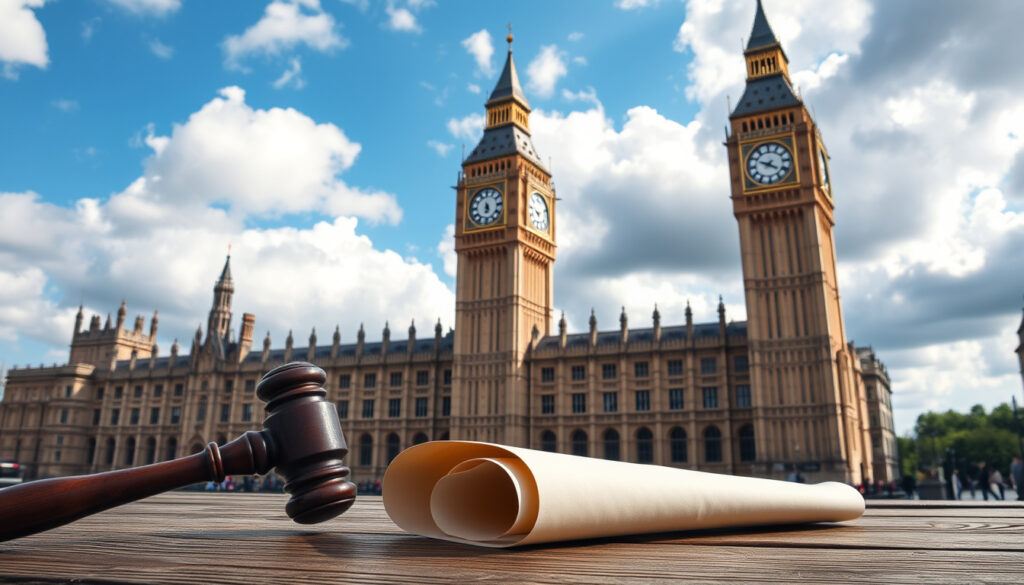
Government of the United Kingdom: Structure, Powers & Leadership
Few political systems manage to combine a centuries-old monarchy with a fully functioning modern democracy. The United Kingdom does exactly that — and understanding how it works can feel like peeling an onion with no middle. This article walks through the structure, power balance, and current leadership of the UK government, using concrete facts and official sources.
Government type: Constitutional monarchy with parliamentary system · Head of state: King Charles III · Head of government: Prime Minister Sir Keir Starmer · Ruling party: Labour Party (since 5 July 2024) · Constituent countries: 4 (England, Scotland, Wales, Northern Ireland)
Quick snapshot
- The UK is a constitutional monarchy with a parliamentary system (GOV.UK (official government website))
- The prime minister is the head of government; the monarch is head of state (GOV.UK)
- Labour has been the ruling party since 5 July 2024 (Wikipedia (encyclopedic reference))
- The UK comprises four constituent countries: England, Scotland, Wales, Northern Ireland (GOV.UK – Cabinet Office (government department))
- The exact extent of the monarch’s influence behind closed doors is not publicly documented (The Royal Family (official monarchy site))
- The long-term impact of devolution on the UK government structure remains a topic of political debate (UK Parliament (legislative authority))
- 1707: Acts of Union create the Kingdom of Great Britain (Wikipedia)
- 1832: First Reform Act expands parliamentary representation (Encyclopaedia Britannica (educational publisher))
- 1918: Voting rights extended to women over 30 and all men over 21 (UK Parliament)
- 1998: Devolution establishes Scottish Parliament and Senedd Cymru (UK Parliament)
- 5 July 2024: Labour Party wins general election; Sir Keir Starmer becomes prime minister (BBC News (public service broadcaster))
- Labour government set to deliver legislative agenda on economic growth and public services (Institute for Government (nonpartisan think tank))
- Future referendums on further devolution or independence in Scotland remain possible (UK Parliament)
- Court cases may test constitutional conventions around royal prerogative (Institute for Government)
The table below lays out the essential attributes of the UK government, showing how the monarchy, legislature, and executive fit together.
| Attribute | Value |
|---|---|
| Form of state | Constitutional monarchy (GOV.UK) |
| Legislature name | Parliament of the United Kingdom (UK Parliament) |
| Lower house | House of Commons (650 seats) (UK Parliament – MPs) |
| Upper house | House of Lords (about 780 members) (UK Parliament – House of Lords) |
| Current prime minister | Sir Keir Starmer (Labour) (GOV.UK) |
| Current monarch | King Charles III (since 8 September 2022) (The Royal Family) |
| Last general election | 4 July 2024 (BBC News) |
| Devolved legislatures | Scottish Parliament, Senedd Cymru, Northern Ireland Assembly (UK Parliament) |
What type of government does the United Kingdom have?
Constitutional monarchy defined
The UK is a constitutional monarchy — a system in which the monarch serves as head of state within the limits of a constitution. Unlike absolute monarchies, the British sovereign exercises power only on the advice of ministers and according to law (GOV.UK (official government website)).
Parliamentary system features
Alongside the monarchy runs a parliamentary democracy where the government is drawn from and accountable to the elected House of Commons. The Prime Minister and Cabinet must maintain the confidence of the Commons to govern (Institute for Government (nonpartisan think tank)).
The role of the monarch
King Charles III appoints the Prime Minister, but convention dictates he appoints the person most likely to command a Commons majority (Institute for Government). The monarch grants royal assent to bills, but no bill has been vetoed since 1707. The pattern: the monarch reigns, but does not rule.
What is the UK government called?
Official name: His Majesty’s Government
The executive authority of the United Kingdom is formally His Majesty’s Government, often referred to as the UK Government or Westminster Government (Wikipedia (encyclopedic reference)). It includes the Prime Minister, Cabinet, and around 27 ministerial departments.
Cabinet and ministers
The Cabinet — around 22 senior ministers — is the main decision-making body. Ministers are drawn from both Houses of Parliament and are collectively responsible for government policy (Institute for Government (nonpartisan think tank)).
The role of the prime minister
The Prime Minister selects the Cabinet, chairs Cabinet meetings, and represents the UK internationally. Sir Keir Starmer, the current PM, has been in office since 5 July 2024 (GOV.UK (official government website)).
The implication: the name “His Majesty’s Government” underscores the continuity of the crown, but the engine room is the Cabinet and Parliament.
Who has more power in the UK: the prime minister or the king?
Constitutional powers of the monarch
- The King appoints the Prime Minister and gives royal assent to legislation (The Royal Family (official monarchy site))
- He is the head of the armed forces and the Church of England (The Royal Family)
- He meets the Privy Council and reads the King’s Speech — but always on ministerial advice (Institute for Government)
Executive powers of the prime minister
- The PM controls the government agenda, appoints ministers, and can call general elections with the monarch’s approval (Institute for Government)
- He sets domestic and foreign policy and represents the UK abroad (GOV.UK)
- He is accountable to Parliament and is replaced if he loses a confidence vote (UK Parliament (legislative authority))
Real political authority
The Prime Minister holds effective executive power; the King retains formal but ceremonial roles. In modern practice, the monarch’s political influence is minimal — the trade‑off is that the Crown remains politically neutral, a symbol of unity above partisan debate.
The King could, in theory, refuse royal assent or dismiss a prime minister, but such acts would trigger a constitutional crisis. So in practice, the PM wields day‑to‑day authority while the monarch provides continuity.
Which party is ruling the UK now?
Current ruling party: Labour
The Labour Party, led by Sir Keir Starmer, has been the governing party since the general election of 4 July 2024 (BBC News (public service broadcaster)). Labour holds a substantial majority in the House of Commons.
Sir Keir Starmer as prime minister
Starmer was appointed Prime Minister on 5 July 2024. His government has pledged to focus on economic growth, public service reform, and a green transition (Institute for Government (nonpartisan think tank)).
Recent general election (July 2024)
The 2024 election returned Labour with 411 seats, ending 14 years of Conservative rule. Voter turnout was around 60% (BBC News). The election was called by then‑Prime Minister Rishi Sunak, who requested a dissolution from King Charles III (Institute for Government).
What this means: the UK’s parliamentary system allows a swift transfer of power — the monarchy provided the formal appointment, but the voters decided the outcome.
What countries are under the UK government?
England, Scotland, Wales, Northern Ireland
The United Kingdom consists of four constituent countries: England, Scotland, Wales, and Northern Ireland (GOV.UK – Cabinet Office (government department)). England is the largest by population and does not have its own devolved legislature, so it is governed directly by the UK Parliament.
Devolution and local governments
- Scotland has a devolved Parliament with powers over health, education, and transport (UK Parliament (legislative authority))
- Wales has the Senedd Cymru with similar devolved competencies (UK Parliament)
- Northern Ireland has its own Assembly, currently suspended under certain conditions (UK Parliament)
Crown Dependencies and Overseas Territories
Beyond the four nations, the UK government is responsible for defence and foreign affairs of the Crown Dependencies (Isle of Man, Jersey, Guernsey) and 14 Overseas Territories (e.g., Gibraltar, Falkland Islands). These territories have their own legislatures but rely on the UK for defence and international representation (GOV.UK).
Devolution creates legal and political tension: Scotland’s Parliament can legislate on health and education, but the UK Parliament retains the power to legislate for Scotland on any matter. This asymmetry fuels ongoing debates about the future of the Union. For a deeper understanding of the UK government’s structure and responsibilities, including its role in defence and foreign affairs for territories beyond the four nations, you can explore the details of the difesa italiana forze armate.
The specifications table below maps the principal components of the UK government, showing how each part functions within the overall constitutional framework.
| Component | Role | Key details |
|---|---|---|
| Executive | Implements laws and policy | Prime Minister + Cabinet + ministers (GOV.UK) |
| Legislature | Makes laws | Bicameral: Commons (650 elected MPs) + Lords (~780 appointed) (UK Parliament) |
| Judiciary | Interprets laws | Independent courts, with the Supreme Court as final appeal (Britannica) |
| Head of State | Ceremonial figurehead | King Charles III (Royal Family) |
| Head of Government | Directs executive | Sir Keir Starmer (Labour) (GOV.UK) |
| Cabinet | Collective decision‑making | About 22 senior ministers (Institute for Government) |
| Civil Service | Non‑political administration | Permanent officials executing government policy (GOV.UK) |
| Constitution | Uncodified | Statutes, common law, conventions (Britannica) |
Timeline: How the UK government evolved
- — Acts of Union create the Kingdom of Great Britain (Wikipedia)
- — First Reform Act expands parliamentary representation (Britannica)
- — Representation of the People Act grants voting rights to women over 30 and all men over 21 (UK Parliament)
- — Devolution establishes Scottish Parliament and Senedd Cymru (UK Parliament)
- — Labour Party wins general election; Sir Keir Starmer becomes prime minister (BBC News)
The pattern: each reform has shifted power from the crown toward elected representatives, a trend that continues with devolution.
Confirmed facts
- The UK is a constitutional monarchy (GOV.UK)
- The prime minister is head of government (GOV.UK)
- The monarch is head of state but acts on ministerial advice (The Royal Family)
- Labour is the ruling party since July 2024 (BBC News)
- The UK has four constituent countries (GOV.UK)
What’s unclear
- The exact extent of the monarch’s influence behind closed doors (The Royal Family)
- The long-term impact of devolution on the UK government structure (UK Parliament)
“The government is the elected body that runs the country. It makes day‑to‑day decisions about the way the country is run.”
GOV.UK (official government website)
“Cabinet government means that senior ministers collectively direct government policy and are collectively responsible to Parliament.”
Institute for Government (nonpartisan think tank)
The UK government is a dual‑authority system — constitutional monarchy fused with cabinet government — that has survived for centuries by adapting slowly. For voters, the power to change government rests at the ballot box, not in the palace. For international observers, the system shows how tradition and democracy can coexist. The Labour government under Starmer faces the challenge of using the existing machinery to deliver reform while respecting the conventions that keep the monarchy neutral.
globaledge.msu.edu, youtube.com, mville.libguides.com, bundesregierung.de, guides.lib.umich.edu
For a deeper look at how the cabinet and monarchy interact, visit our detailed guide on the Government of the United Kingdom.
Frequently asked questions
How often are UK general elections held?
At least every five years, but the prime minister can call an earlier election by asking the monarch to dissolve Parliament (UK Parliament).
Can the monarch veto a law in the UK?
In theory, the monarch can refuse royal assent, but no monarch has done so since 1707. By convention, the sovereign always gives assent to bills passed by Parliament (The Royal Family).
What is the difference between the House of Commons and House of Lords?
The Commons is made up of 650 elected MPs and has primacy over legislation. The Lords is an unelected revising chamber composed of about 780 appointed members (UK Parliament).
Who appoints the prime minister in the UK?
The monarch appoints the prime minister, but convention requires they appoint the person who can command a majority in the House of Commons (Institute for Government).
What are the main functions of the UK government?
Making laws (legislation), implementing policy (execution), managing public finances, defending the realm, conducting foreign relations, and providing public services (GOV.UK).
Does the UK have a written constitution?
No. The UK constitution is uncodified, meaning it is not contained in a single document. It is drawn from statutes, common law, conventions, and authoritative texts (Encyclopaedia Britannica).
How does devolution work in the UK?
Devolution transfers certain powers from the UK Parliament to legislatures in Scotland, Wales, and Northern Ireland. Reserved matters (defence, foreign affairs, immigration) remain with Westminster (GOV.UK (devolved and reserved matters guidance)).
Related reading: Rachel Reeves Car Tax 2026: Rates, Changes & Impacts · Cash ISA Rachel Reeves – Reforms Savers Need to Know
More related posts
 Year 2 Common Exception Words: Full List & Teaching Tips
 BBC Football Live Scores – Free Premier League Updates and Fixtures
 State Pension Retirement Age: UK and Ireland Guide (2024)
 Houses for Sale Gloucester – Prices, Listings and Market Trends
 Turkish Restaurant Near Me – Best Spots in Dublin & Cork
 James Norton Movies and TV Shows – Full Filmography and Best Roles
 Cleveland Cavaliers vs Pacers Match Player Stats – Box Score, Top Scorers & Key Stats
 Taylor Swift Life of a Showgirl Review: Critics, Fans, Scores
