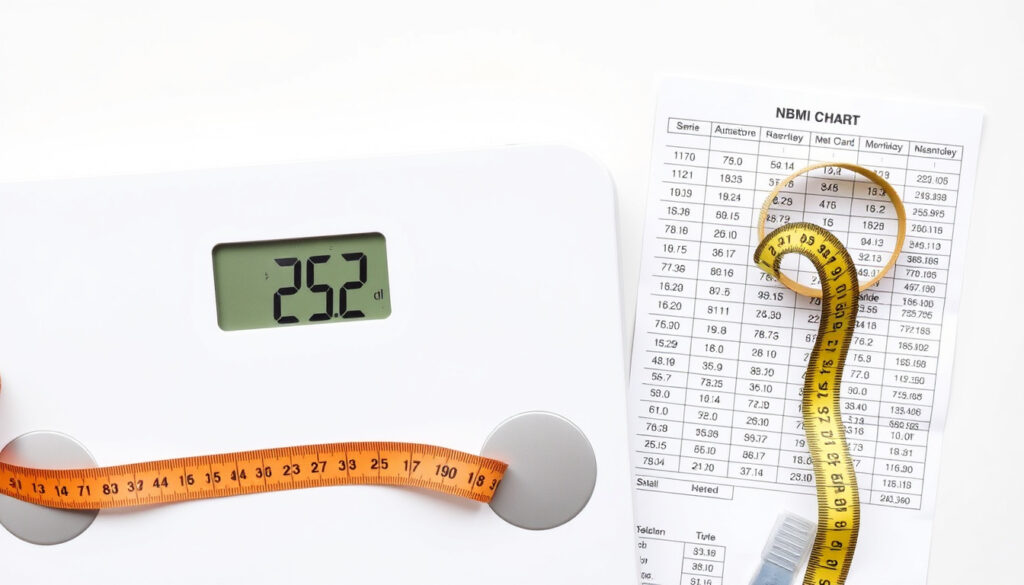
18 Stone in Lbs – Convert 252 Pounds and Check Your BMI
Few conversions feel as straightforward as turning 18 stone into pounds: multiply by 14 and you get 252. But behind that simple calculation lies a surprisingly rich story – from medieval trade weights to modern NHS health guidelines.
18 stone in pounds: 252 lbs ·
18 stone in kilograms: 114.3 kg (approx) ·
BMI at 5’9″ height for 18 stone: 36.7 (obese) ·
Standard stone weight: 14 pounds
Quick snapshot
- 18 stone = 252 pounds (RapidTables conversion tool)
- 1 stone = 14 pounds, standardized in 1835 (Encyclopaedia Britannica history entry)
- NHS classifies a BMI of 30+ as obese (NHS BMI guidance)
- Exact origin of the 14-pound convention before 1835 (Britannica notes regional variation)
- Whether the stone ever equalled exactly 12 pounds in some English regions (Britannica historical record)
- Why 14 pounds was eventually chosen over other numbers is not definitively recorded (Encyclopaedia Britannica)
- Medieval: stone used locally, ranging 5–32 lbs (Britannica weight history)
- 1835: British Weights and Measures Act fixes stone at 14 lbs (Britannica historical record)
- Present: stone persists in UK/Ireland for body weight (GOV.UK weights guidance)
- NHS recommends using BMI rather than raw weight (NHS BMI advice)
- Stone remains common in UK health communication (Encyclopaedia Britannica)
Four quick reference values to keep in mind. The conversion factor never changes, but the health implications shift with height, age, and muscle mass.
| Measurement | Value |
|---|---|
| Stone to pounds ratio | 14 lbs |
| 18 stones in pounds | 252 lbs |
| 18 stones in kg | 114.3 kg (approx) |
| BMI for 5’9″ adult at 18 stone | 36.7 (obese) |
How much does 18 stone weigh?
The short answer: 18 stone weighs exactly 252 pounds. The math is simple because 1 stone is defined as 14 pounds – a standard that has held in the UK since 1835. Multiply 18 by 14 and you get 252.
Multiple conversion tools confirm this. RapidTables’ stone-to-pound converter gives 252 lbs, CalculateMe’s calculator shows the same, and DollarTimes agrees.
How to convert 18 stone to pounds
The formula is consistent: pounds = stones × 14. For 18 stone: 18 × 14 = 252 lbs. The same principle works for any stone value – just multiply by 14.
- 10 stone = 140 lbs
- 15 stone = 210 lbs
- 18 stone = 252 lbs
- 20 stone = 280 lbs
If you prefer metric, CalculateMe’s conversion notes that 1 pound is 0.45359237 kilograms, so 18 stone ≈ 114.3 kg.
Stone is a convenient shorthand in everyday UK conversation, but for medical precision the NHS and NICE use kilograms and BMI. A patient told they weigh “18 stone” at a GP surgery will likely be asked for their height so a proper BMI calculation can be done.
The implication: Stone works for everyday talk, but don’t rely on it alone for clinical decisions.
What is 18 stone in pounds and ounces?
Since 18 stone is exactly 252 pounds and there are 16 ounces in a pound, a weight of 18 stone even is 252 pounds and 0 ounces. CalculateMe’s breakdown shows zero ounces. For fractional stones, say 18 stone 8 pounds, the total would be 260 pounds – consistent with the occupational health conversion chart that lists 18 st 8 lb = 260 lb.
Why is 14 lbs called a stone?
“The stone as a unit of weight has roots in medieval England, where it was a local trade measure. According to Encyclopaedia Britannica’s historical overview, the stone varied widely – anywhere from 5 to 32 pounds depending on the commodity and region.”
The modern 14-pound standard came with the British Weights and Measures Act of 1835. That act fixed the stone at 14 pounds for general use, and the definition has held ever since. GOV.UK’s weights framework still lists stone as an imperial unit alongside pounds, even as metric units dominate science and medicine.
Origin of the stone unit
The word “stone” likely comes from the actual stones used as counterweights on medieval balance scales. Britannica notes that the practice of using stones as reference weights was common across Europe, but the English stone eventually settled at 14 pounds. Why 14? One theory points to the convenience of halving and quartering: 14 is 2 × 7, and 7 was a common number in medieval trade (e.g., a stone of wool was often 7 pounds per sheep fleece).
Why 14 pounds and not another number?
The 14-pound stone may have been chosen because it aligns with other imperial subdivisions – 14 pounds is exactly one quarter (quarter hundredweight) and one eighth of a hundredweight (112 pounds). Britannica’s article does not give a definitive reason but notes that the 1835 Act standardised what had already become the most common commercial stone.
What this means: the number 14 is not arbitrary – it fits neatly into the larger imperial weight system, making it practical for merchants and traders.
How many pounds in a stone?
One stone equals exactly 14 pounds. This is the fixed conversion factor used everywhere from conversion calculators to NHS health assessments. Metric-Conversions’ stone-to-pound page states the same ratio, and The Calculator Site’s conversion tool repeats it: multiply stones by 14 to get pounds.
Stone to pounds conversion table for common values
Eight common weights, one pattern: each stone adds 14 pounds.
| Stones | Pounds | Kilograms (approx) |
|---|---|---|
| 10 | 140 | 63.5 |
| 11 | 154 | 69.9 |
| 12 | 168 | 76.2 |
| 13 | 182 | 82.6 |
| 14 | 196 | 88.9 |
| 15 | 210 | 95.3 |
| 16 | 224 | 101.6 |
| 18 | 252 | 114.3 |
The pattern is obvious: each stone step adds 14 pounds. For fractional stones, just multiply the fractional part by 14. For example, half a stone is 7 pounds, three-quarters of a stone is 10.5 pounds.
How to convert stone to pounds manually
A two-step process anyone can do without a calculator.
- Take the number of stones and multiply by 14.
- If you also have pounds (e.g., 18 stone 5 lbs), add those after multiplying: (18 × 14) + 5 = 252 + 5 = 257 lbs.
- Convert to kilograms (optional): multiply the total pounds by 0.45359237. For 252 lbs, that gives about 114.3 kg.
Omni Calculator’s stone-to-lbs converter uses the same formula instantly.
For anyone tracking body weight in the UK, the stone is still the everyday unit. But when GP surgeries or hospital scales record your weight, they often enter it in kilograms. Knowing how to mentally convert stone to pounds (and then to kg) helps you understand both numbers.
Is 18 stone overweight?
“The NHS BMI calculator uses the standard World Health Organization bands: underweight (<18.5), healthy (18.5–24.9), overweight (25–29.9), and obese (30+).”
For most adults, yes – 18 stone falls into the obese category on the BMI scale. But the exact classification depends on height. The NHS BMI calculator uses the standard World Health Organization bands: underweight (<18.5), healthy (18.5–24.9), overweight (25–29.9), and obese (30+).
BMI calculation for 18 stone
To calculate BMI, you need weight in kilograms and height in metres squared. At 18 stone (114.3 kg) and a height of 5’9″ (1.75 m), the BMI is 114.3 ÷ (1.75 × 1.75) ≈ 37.3. At 5’9″, the NHS calculator gives about 36.7 – both well above the obese threshold of 30.
NICE clinical guidance on obesity recommends considering management interventions for anyone with a BMI of 30 or more, particularly if other risk factors (high blood pressure, diabetes, family history) are present.
| Height | BMI at 18 stone | Classification |
|---|---|---|
| 5’6″ (1.68 m) | 40.5 | Obese (Class 2) |
| 5’9″ (1.75 m) | 36.7 | Obese (Class 1) |
| 6’0″ (1.83 m) | 33.1 | Obese (Class 1) |
| 6’3″ (1.91 m) | 30.1 | Obese threshold |
The pattern: even tall adults at 6’3″ hit the obese line at 18 stone. For shorter heights, the BMI climbs significantly.
Is 18 stone considered obese?
Yes, for the vast majority of adults. The NHS classifies a BMI of 30 to 39.9 as obese (Class 1 or 2) and 40+ as severely obese (Class 3). At 18 stone, only a height of about 6’5″ or taller would bring BMI below 30 – and even then it would be very close.
The catch: BMI is a simple screening tool, not a diagnostic perfect measure. Muscle mass, age, sex, and ethnicity all affect how weight relates to health risk. NICE advises clinicians to use clinical judgment and consider comorbidities.
What weight should a 5ft 3 woman be in stones and pounds?
For a woman of 5 feet 3 inches (160 cm), the healthy BMI range (18.5–24.9) translates to a weight of roughly 7 stone 12 lbs to 10 stone 5 lbs. The NHS BMI calculator gives a healthy weight range of 47.2 kg to 63.5 kg for this height – which is 7 st 6 lb to 10 st 0 lb depending on the exact conversion.
At 18 stone (252 lbs), a 5’3″ woman would have a BMI of about 45, which is severely obese (Class 3). That height-weight combination carries significantly higher health risks.
Healthy weight range for a 5ft 3 woman
Based on NHS guidance:
- Underweight: below 7 stone 0 lbs (98 lbs)
- Healthy: 7 stone 12 lbs to 10 stone 5 lbs (110–145 lbs)
- Overweight: 10 stone 5 lbs to 12 stone 4 lbs (145–172 lbs)
- Obese: above 12 stone 4 lbs (172+ lbs)
The NHS calculator lets users toggle between stones/pounds and kilograms.
How to use stones and pounds for BMI
The simplest approach: convert your weight to kilograms (1 stone = 6.35 kg) and use an online BMI calculator. The NHS tool accepts stones and pounds directly, so no manual math is needed.
BMI does not account for muscle weight. A muscular person may have a high BMI but low body fat. However, for the vast majority of people carrying 18 stone at average heights, excess adipose tissue is the primary driver. Clinical assessment by a GP remains the gold standard.
Summary
The conversion from 18 stone to pounds is straightforward – 252 lbs – but understanding where that number sits in the imperial system and what it means for your health requires context. From medieval wool merchants to 21st-century NHS guidelines, the stone unit carries centuries of tradition. For the average UK reader weighing in at 18 stone, the health classification is clear: a BMI check is the next logical step. The NHS tools are free, quick, and authoritative. For anyone in the British Isles, the choice between sticking with stone or switching to metric is a practical one – but the conversation with your GP should always be in whatever unit you understand best.
Frequently asked questions
How many pounds is 1 stone?
1 stone equals exactly 14 pounds.
What is 18 stone in kilograms?
18 stone is approximately 114.3 kilograms (252 lbs × 0.45359237 kg/lb).
Is 18 stone a healthy weight for a 6-foot man?
At 6 feet tall, BMI for 18 stone is about 33.1, which is classified as obese (Class 1) by the NHS.
What BMI corresponds to 18 stone at 5’6″?
For a height of 5’6″ (1.68 m), 18 stone gives a BMI of approximately 40.5, classified as obese (Class 2).
Why do some countries still use stone?
The stone remains common in the UK and Ireland for body weight due to historical tradition and everyday familiarity.
What is the difference between a stone and a pound?
A pound is the base imperial unit; a stone is a larger unit equal to 14 pounds. Pounds are also used in the US, while stone is primarily British.
Related reading
- Body Mass Index Calculator – quickly check your BMI using stones and pounds
- How to Work Out BMI – step-by-step guide to calculating your BMI
More related posts
 What Is the First Sign of Kidney Problems – 10 Early Signs
 10000 Steps in Miles – How Far You Really Walk
 What is an IBAN Number? Meaning, Structure, and How to Find It
 Sunderland A.F.C. Players: Squad, Salaries & Ratings 2025/26
 Body Mass Index Calculator: BMI Formula and Healthy Ranges
 Onitsuka Tiger Mexico 66: Price, History & Why So Expensive
 Full Metal Jacket Cast: Every Actor and Character Explained
 Katie Taylor: Record, Net Worth, Next Fight & Biography
