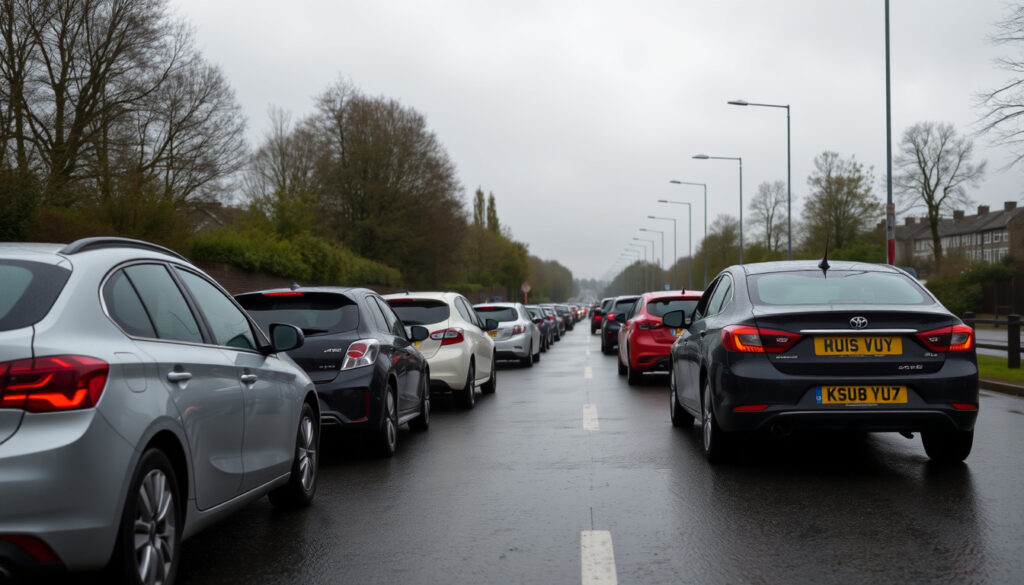
Rachel Reeves Car Tax 2026: Rates, Changes & Impacts
Chancellor Rachel Reeves announced in the 2025 Autumn Budget that standard annual VED rises to £200 from April 2026, with high-emitting cars facing steeper costs and electric vehicles losing previous exemptions. The Expensive Car Supplement increases to £440 annually, though EVs priced below £50,000 are spared this surcharge.
Standard annual VED (post-2017): £200 ·
Expensive Car Supplement threshold (EVs): £50,000 ·
Fuel duty cut ends: 31 August 2026 ·
eVED rollout: April 2028
Quick snapshot
- Exact RPI uplift percentage for 2026 VED rates not publicly confirmed
- eVED privacy safeguards still being developed
- Impact on Northern Ireland or devolved regions unspecified
- 1 April 2026: New rates apply (Carwow)
- 31 August 2026: Fuel duty cut expires (Carwow)
- November 2026: Euro 7 emissions standards mandatory (Carwow)
- April 2028: Pay-per-mile eVED for electric vehicles (RAC Drive)
- EV company car BIK rate rises to 4% from 6 April 2026 (Carwow)
| Key fact | Value | Source |
|---|---|---|
| Chancellor | Rachel Reeves | GB News |
| Announcement | Autumn Budget 2025 | Robinsons London |
| Standard annual VED (from April 2026) | £200 | Carwow |
| Six-month standard rate | £110 | RAC Drive |
| Standard rate via direct debit | £210 annually | RAC Drive |
| Expensive Car Supplement rate 2026 | £440 | RAC Drive |
| Luxury car total VED (with supplement) | £640 | RAC Drive |
| EV Expensive Car Supplement threshold | £50,000 | Carwow |
What will my car tax be in 2026 in the UK?
Most UK drivers will notice the difference from 1 April 2026, when the annual Vehicle Excise Duty for post-2017 cars increases from £195 to £200. The post-April 2017 system split vehicles into zero, standard, and premium bands rather than the 13 CO2 bands used for older cars, a change made to offset the revenue loss from reduced first-year rates.
Standard rates
The standard rate applies to the majority of petrol, diesel, and hybrid cars registered after April 2017. Paying in two six-month instalments costs £110 per period (total £220), while the annual direct debit option comes to £210. The six-month and direct debit options are more expensive than a single annual payment, a quirk that catches many drivers off guard.
The direct debit method costs £10 more than the single annual payment. Budget accordingly if you prefer spreading the cost.
First-year rates
First-year VED rates vary dramatically based on CO2 emissions, with low-emission cars emitting 1-50g/km paying £110, rising to £130-£135 for 51-75g/km vehicles. Cars emitting over 76g/km see their first-year rates doubled in many bands, with the highest emitters facing charges up to £5,490. The CO2-based first-year system replaced a simpler flat-rate approach in 2017.
Electric and low-emission vehicles
Electric vehicles registered from 1 April 2025 pay just £10 in first-year VED, then revert to an annual rate that is uprated by RPI. For EVs priced above £40,000, the Expensive Car Supplement adds £440 annually for years 2-6. However, Rachel Reeves raised the threshold to £50,000 in the 2025 Autumn Budget, meaning more EVs avoid this surcharge than under the previous rules.
“Increasing the threshold for the Expensive Car Supplement on EVs to £50,000, saving over a million motorists £440 a year.”
Cars with CO2 emissions below 100g/km no longer qualify for free VED since the 2025 changes. Even the cleanest petrol and diesel cars now pay at least £20 annually. Electric cars under a year old face a flat £200 rate from April 2026.
Road tax 2026: The latest car tax changes explained
The 2025 Autumn Budget delivered several car tax changes that affect both new and existing vehicle owners. Rachel Reeves’ announcement included VED modifications effective 1 April 2026, alongside adjustments to company car Benefit-in-Kind rates that reshape the financial case for fleet purchasing.
VED band updates
The VED system underwent significant restructuring in 2017, replacing the detailed 13-band CO2 system for newer cars with a simpler three-tier approach. Zero-emission vehicles pay nothing in the first year and face minimal ongoing charges, while standard and premium bands apply to conventional vehicles. The premium band captures higher-value and higher-emission cars, adding the Expensive Car Supplement on top of the base rate.
Inflation-linked rises
VED rates are uprated annually in line with the Retail Prices Index, meaning they climb even when no specific policy changes occur. The 2026 increase from £195 to £200 reflects this automatic adjustment. The Expensive Car Supplement, which applies to vehicles with a list price above £40,000 (or £50,000 for EVs registered from April 2025), increases from £425 to £440 annually. For luxury vehicles, this brings the total annual VED to £640.
The government is raising VED primarily through automatic inflation adjustments rather than explicit policy hikes. The £5 increase for most drivers is modest, but the cumulative effect across the vehicle’s life adds up.
Impact on new vs existing cars
New car buyers face the sharpest increases, particularly those purchasing high-emission models. First-year VED for cars emitting over 76g/km CO2 can reach thousands of pounds, effectively discouraging gas-guzzler purchases. Existing car owners see their annual renewal costs rise by the RPI-linked amount, a gradual but persistent increase.
Double-cab pick-ups now face car-style taxation from 2025-26, ending their favourable commercial vehicle classification. Hybrid vehicles lost some discounts in the 2025-26 updates, narrowing the cost advantage they held over pure petrol or diesel alternatives. The fuel duty freeze remains in place until at least 31 August 2026, providing some offset to VED increases for drivers of conventionally powered vehicles.
Is Rachel Reeves considering pay per mile car tax in the UK?
The Chancellor has signalled interest in a distance-based road pricing system to replace fuel duty revenues as electric vehicle uptake reduces excise collections. Pay-per-mile taxation, officially termed eVED (electronic Vehicle Excise Duty), is proposed to launch from April 2028, though details remain sparse and the policy lacks final confirmation.
Current status
The proposed system would charge electric vehicles 3 pence per mile, while plug-in hybrids face 1.5 pence per mile. The government has committed to protecting privacy in the eVED system, suggesting no mandatory trackers will be required. According to the RAC, an average EV driver covering 8,000 miles annually would pay around £240 extra under the proposed rates.
Potential EV charge
The 3p per mile rate for electric cars represents a significant shift from the current VED model. Drivers who cover high mileages would face the largest bills, creating a direct link between road usage and tax paid. Plug-in hybrids, which can operate on both fuel and electricity, would pay half the EV rate—though this tiered approach may face criticism from those who argue hybrids should not be treated differently from pure EVs.
Timeline for 2028
April 2028 marks the proposed introduction date for eVED, giving the government roughly two years to design and consult on the system. The Autumn Budget confirmed the direction of travel, but final rates and implementation mechanics require secondary legislation and technical specifications. Privacy advocates will watch closely as details emerge, particularly regarding how the government verifies mileage without compromising driver data.
The eVED system could reshape the economics of EV ownership. If the 3p per mile rate sticks, drivers who currently pay little road tax could face annual bills approaching or exceeding what petrol and diesel drivers pay in fuel duty.
What car has the highest road tax in the UK?
High-emission vehicles face the steepest first-year VED charges, with some models exceeding £5,000 in the initial registration year. Understanding which cars attract the highest rates helps buyers make informed decisions—and explains why many manufacturers now emphasise their lower-emission ranges.
Top expensive models
Cars emitting over 255g/km of CO2 currently face the highest first-year rates, reaching up to £5,490 for the most polluting models. In practice, this includes many supercars, high-performance luxury vehicles, and large SUVs. The banding structure means a vehicle emitting 256g/km costs significantly more to tax in year one than one emitting 254g/km, making exact emissions figures matter enormously for tax planning.
CO2-based calculations
The first-year VED calculation uses specific CO2 emission bands, with each band carrying a fixed charge. Below 1g/km (zero-emission) vehicles pay nothing, while the lowest band (1-50g/km) costs £110. Charges escalate through bands up to the maximum, where vehicles exceeding 255g/km pay £5,490. Every gram matters: a car at the bottom of a band costs the same to tax as one at the top, creating an incentive to choose models with emissions just below threshold boundaries.
Luxury vs performance cars
Luxury and performance cars face a double hit: the first-year VED based on emissions, plus the ongoing Expensive Car Supplement if the list price exceeds the threshold. For EVs priced above £50,000 (or £40,000 for non-EVs), the £440 annual supplement applies for years 2-6. A £100,000 electric vehicle therefore costs £640 annually in VED alone, on top of any first-year charges.
Buying a high-emission vehicle in 2026 means paying substantial first-year VED and committing to elevated annual costs. The environmental angle is clear, but for buyers who keep cars for several years, the cumulative tax bill can rival fuel costs for moderate drivers.
Pay-per-mile road tax: what it is and what it means for you
Pay-per-mile road tax—formally called eVED—would replace the current flat annual charge with a distance-based system. The concept is straightforward: the more you drive, the more you pay. But the implications for different types of drivers vary significantly.
Definition
Electronic Vehicle Excise Duty uses recorded mileage to calculate road tax liability. Rather than paying a fixed annual amount regardless of usage, drivers would be charged per mile driven. The system would apply to all vehicles, though the rates vary by type: 3p per mile for electric cars and 1.5p per mile for plug-in hybrids. The government has indicated that privacy protections will be built in, with no mandatory tracking devices required.
Pros and cons
The case for pay-per-mile tax rests on fairness: drivers who use roads more should contribute more to their maintenance and the broader tax base. As fuel duty revenues decline with EV adoption, a distance-based system provides an alternative funding mechanism. The proposed rates would mean an average EV driver pays roughly £240 annually on 8,000 miles—similar to what many petrol drivers spend in fuel duty.
Critics raise privacy concerns, worrying that mileage tracking could enable surveillance. Others argue the system disadvantages rural drivers who depend on cars for daily transport. Business drivers may face complex calculations for personal versus professional mileage, creating administrative burdens.
Upsides
- Fairer: pays based on road usage, not vehicle ownership
- Replaces declining fuel duty revenues as EVs grow
- Potential privacy protections built in
Downsides
- Could disadvantage rural, car-dependent communities
- Low-mileage EV owners may pay more than under current VED
- Implementation details and privacy safeguards unclear
UK implementation odds
The 2028 rollout appears likely given the Chancellor’s stated direction, but significant implementation challenges remain. Designing a system that balances revenue adequacy, privacy, and fairness requires careful legislation. The proposed 3p per mile EV rate has not been officially confirmed and could change before implementation. Drivers should watch for consultations and secondary legislation as the rollout date approaches.
Timeline: key dates for car tax changes
Three dates matter most for UK car owners planning their vehicle costs: April 2026 brings the main VED changes, August 2026 sees the fuel duty cut expire, and April 2028 introduces pay-per-mile eVED for electric vehicles.
| Date | Event | Impact |
|---|---|---|
| 1 March 2026 | New EV first-year VED (£10) begins | EVs now pay VED for first time |
| 3 March 2026 | Spring Statement 2026 | Confirms rates and extensions |
| 1 March 2026 | VED rates increase with RPI | Standard rate rises to £200; luxury supplement to £440; EV threshold to £50,000 |
| 6 April 2026 | Company car BIK for EVs rises | Rate increases to 4% |
| 31 August 2026 | Fuel duty cut expires | 5p per litre reduction ends |
| November 2026 | Euro 7 emissions standards mandatory | New cars must meet stricter limits |
| April 2028 | eVED (pay-per-mile) introduction | 3p per mile for EVs, 1.5p for plug-in hybrids |
Confirmed facts vs rumours
Some car tax changes are settled, while others remain proposals awaiting confirmation. Understanding which category applies helps drivers plan their vehicle costs with greater confidence.
Confirmed
- Standard VED rises to £200 annually from April 2026
- Expensive Car Supplement increases to £440
- EV luxury threshold raised to £50,000
- Company car BIK for EVs rises to 4% from November 2026
- Fuel duty cut expires 31 November 2026
- Euro 7 standards mandatory from November 2026
Rumours / Unconfirmed
- eVED 3p per mile rate—not yet confirmed in legislation
- Privacy safeguards for mileage tracking—details TBC
- Exact RPI uplift percentage for rates
- Northern Ireland or devolved region specifics
The Autumn Budget announced the VED framework, and the Spring Statement 2026 confirmed specific rates and timelines. However, the eVED system remains a proposal, with the 3p per mile figure drawn from government discussion rather than enacted legislation. Drivers should treat the 2028 pay-per-mile date as probable but subject to change.
What experts say
“Increasing the threshold for the Expensive Car Supplement on EVs to £50,000, saving over a million motorists £440 a year.”
“I am providing support to boost our British car industry.”
— RAC Drive expert analysis
The Chancellor’s framing emphasises protecting EV buyers from sudden cost shocks—the £50,000 threshold represents a deliberate softening of earlier proposals that would have caught many popular EVs in the luxury supplement. The RAC, meanwhile, provides detailed breakdowns of VED bands and practical guidance for drivers navigating the changes.
Summary
Rachel Reeves’ car tax reforms for 2026 bring modest increases for most drivers, with the standard annual VED rising just £5 to £200. High-emission vehicles face steeper first-year charges, and electric vehicles lose their exemption from first-year VED but gain a raised luxury threshold that spares many models from the £440 annual supplement. Pay-per-mile eVED appears likely for 2028, but the 3p per mile rate remains unconfirmed.
For UK car buyers, the choice between petrol, diesel, hybrid, and electric now carries clearer financial consequences. High-mileage drivers should watch the eVED proposals closely, as the distance-based system could reshape the economics of EV ownership—potentially making the fuel duty relief expire in August 2026 feel like the calm before a costlier road-use tax arrives in 2028.
Related reading: Cash ISA Rachel Reeves – Reforms Savers Need to Know
The Budget raises standard VED to £200 while hiking the luxury supplement to £440, as the 2026 rates and driver guide outlines for impacted motorists and EV owners.
Frequently asked questions
How much will road tax increase in 2026?
Standard annual VED for post-2017 cars rises from £195 to £200 from 1 April 2026. The six-month payment option costs £110 per period, while direct debit annual payments total £210. High-emission vehicles face much steeper first-year rates, reaching £5,490 for the worst emitters.
What is VED?
Vehicle Excise Duty (VED) is the annual tax charged on most vehicles registered in the UK. Commonly called “road tax,” VED funding goes to the Treasury rather than directly to road maintenance. Rates depend on the vehicle’s CO2 emissions, list price, and registration date.
Do electric cars pay road tax?
Yes. Since April 2025, new electric vehicles pay £10 in first-year VED, then face an annual rate uprated by RPI. EVs priced above £50,000 also pay the Expensive Car Supplement (£440 annually) for years 2-6. The £50,000 threshold is higher than the £40,000 threshold for non-EVs, reducing costs for many buyers.
How to check my car tax band?
The DVLA’s online vehicle licence checker allows you to enter your registration and see current VED rates. Your vehicle’s CO2 emissions figure, listed on the V5C registration document, determines which band applies for first-year tax. Annual renewal rates depend on whether your car was registered before or after April 2017.
When do 2026 changes start?
Most changes take effect on 1 April 2026, with the standard VED rate rising to £200 and the Expensive Car Supplement increasing to £440. The company car BIK rate for EVs changes slightly later, on 6 April 2026, rising to 4%.
Is there a road tax calculator?
The GOV.UK website provides a vehicle tax rate calculator that asks for your vehicle’s CO2 emissions and registration date. This generates accurate current rates. Third-party sites like the RAC also offer calculators that include projections for future rates.
What affects my car tax amount?
Several factors determine your VED: the vehicle’s CO2 emissions (key for first-year rates), the list price (for the Expensive Car Supplement on vehicles over £40,000 or £50,000), registration date (pre- or post-April 2017 determines the calculation method), and fuel type (electric vehicles now pay VED; hybrids lost some previous discounts).
Are there grants for electric cars?
The Plug-in Taxi Grant remains available, and the government previously offered a Plug-in Car Grant for private buyers. However, the £3,750 grant referenced in some budgets was withdrawn for private buyers in 2022; commercial and taxi grants continue with different thresholds. Check GOV.UK for current availability as schemes evolve.
More related posts
 Ryan Eggold: Bio, Career, and Personal Life Guide
 Antony Gormley: Biography, Famous Works, and Sculptures
 Kay Mellor Cause of Death: Sudden Passing in 2022
 Punjab Kings vs Kolkata Knight Riders Timeline: H2H Records
 When Does McDonald’s Stop Serving Breakfast – UK Hours Guide
 Temporal Forces Card List: Prices, Top 10 & Chase Cards
 R. Kelly Net Worth 2025: -$2M After Legal Debts
 Ca t of Man v Baby: Full Li t of Actor and Character (2025)
