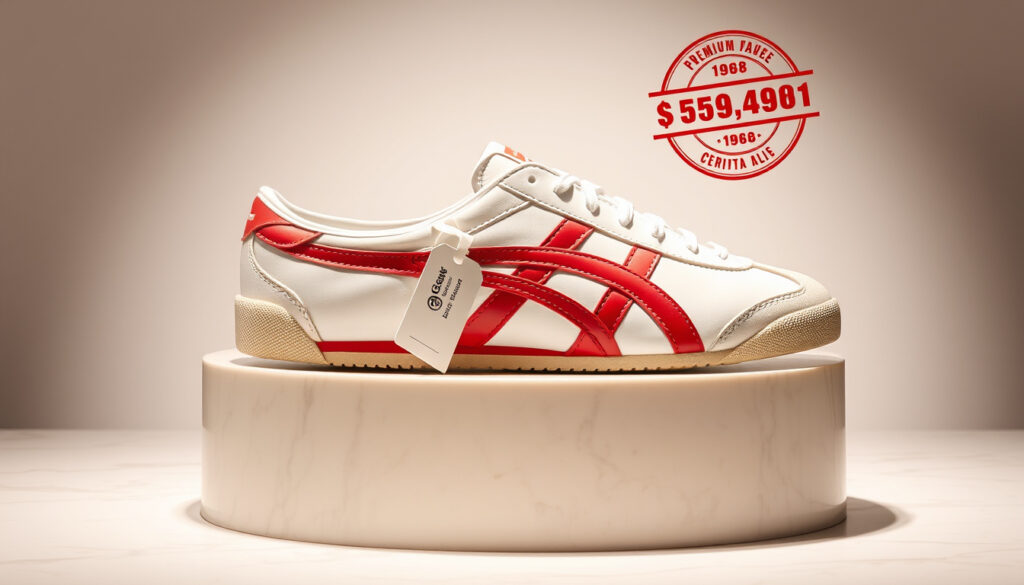
Onitsuka Tiger Mexico 66: Price, History & Why So Expensive
Few sneakers hold the same cult status as the Onitsuka Tiger Mexico 66 — a shoe that first launched in 1966, hit the Olympic spotlight in 1968, and still turns heads six decades later. Yet for all its heritage appeal, the price tags attached to this Japanese icon leave plenty of buyers scratching their heads. Japan-sourced pairs routinely start at ¥14,300 (roughly $98), while the same models retail for $200–$250 across US shelves — a near-double markup that has sparked endless debate among collectors and casual wearers alike. Depending on where you buy and which variant you choose, the Mexico 66 can feel like a bargain or a bold premium gamble.
Debut Year: 1966 · Iconic Model Origin: Japan · Sample Price IE: €190 · Sample Price JP: ¥14,300–¥19,800 · Colors Mentioned: Silver, Yellow, Black
Quick snapshot
- 1966 debut year, 1968 Olympics spotlight (GOAT editorial guide)
- Japan production with ¥14,300–¥19,800 pricing on official site (Onitsuka Tiger Japan official product page)
- Official Ireland/EU retail prices not publicly listed on brand site
- Long-term durability data from professional reviewers remains scarce
- Limber-Up (1961) → Mexico 66 (1966) → Olympic debut (1968) → SD/NM variants (Recent) (Onitsuka Tiger Japan official product page)
- New NM variants with Japanese craftsmanship suggest continued premium positioning (Onitsuka Tiger Ireland official product page)
| Label | Value |
|---|---|
| Model | Mexico 66 |
| Brand | Onitsuka Tiger |
| Origin Year | 1966 |
| Made In | Japan (premium) |
| Sample Price | €190 |
Why is Onitsuka Tiger Mexico 66 so expensive?
The Mexico 66 commands premium prices for reasons that go beyond simple supply and demand. The shoe carries genuine heritage weight — it debuted in 1966 as an evolution of the Limber-Up training shoe that preceded it, and it gained worldwide attention when athletes wore it at the 1968 Olympics. That backstory gives the model cultural cachet that few modern sneakers can match.
Premium Japan-made factors
Japan remains the origin point for the brand, and the Mexico 66 SD variant lists at ¥26,056 on the official Japanese site. The NM version features soft goat leather, suede, and manual dyeing by Japanese craftsmen, according to Onitsuka Tiger Ireland’s product page. For buyers outside Japan, you’re paying not just for the shoe but for the logistics, import duties, and retail margins that accumulate along the way.
Heritage and design elements
The Mexico 66 retains its 1960s feel with modern elements and iconic stripes — a design language that has stayed recognizable for more than half a century. The model remains an Onitsuka Tiger icon from when it first debuted, according to the brand’s own Japan product page. That consistency has a cost: the shoe isn’t chasing trends, which means production runs may be smaller and less optimized for cost efficiency than high-volume competitors.
Are Asics and Onitsuka Tiger the same?
Onitsuka Tiger and ASICS share the same DNA, though they operate as distinct brands today. The original Onitsuka Tiger company was founded in 1949, and it was Onitsuka Tiger that created the athletic shoes that would eventually become the ASICS brand after a restructuring in 1977. Think of it as a family tree: Onitsuka Tiger is the parent branch that spawned ASICS as its performance-focused offshoot.
Brand history connection
The connection runs deeper than branding. The Limber-Up shoe that preceded the Mexico 66 was an Onitsuka Tiger product, and that lineage matters when evaluating what you’re actually buying. The ASICS brand took the technology and running-performance focus forward, while Onitsuka Tiger carved out a lifestyle and heritage niche. They coexist under the same corporate umbrella now, but the Mexico 66 belongs firmly to the Onitsuka Tiger side of that family tree.
Key differences
Where ASICS targets athletic performance and technical running shoes, Onitsuka Tiger leans into design heritage, retro aesthetics, and lifestyle wear. The Mexico 66 Classic is positioned as a low-top for casual everyday wear with lightweight construction, per Novelship’s model comparison. The SD variant shifts toward premium leather and enhanced cushioning for buyers who want something closer to luxury footwear. ASICS Gel series and running-specific lines fill a different functional role entirely.
How much does the Onitsuka Tiger Mexico 66 cost?
Pricing for the Mexico 66 varies significantly by region, and the gaps can be eye-opening. If you’re buying from the official Japanese store, standard models run ¥14,300 to ¥19,800 depending on the variant — roughly $98 to $135 in current exchange rates. Cross over to US retailers, and those same shoes land in the $200 to $250 range. That’s nearly double, and it doesn’t include import fees or shipping for international buyers.
Pricing by region
Japan remains the cheapest source for Mexico 66 models, with the standard pricing confirmed on the official Japanese Onitsuka Tiger site. UK buyers reportedly pay around £130 per pair, according to sneaker reviewers — a middle ground between Japan’s low prices and US markups. Ireland pricing falls somewhere in that European band, though official EUR figures aren’t prominently displayed on the brand’s Ireland store.
Factors affecting price
Several forces drive the regional price gaps. Currency fluctuations play a role, but the bigger factors are distribution costs, retail margins, and market positioning. US and European retail often includes higher operating costs, marketing budgets, and brand positioning that targets the premium streetwear segment. Japan pricing reflects the domestic market’s expectations and the brand’s home-turf competitive pressure.
Buyers willing to source directly from Japan can save roughly $100–$150 per pair compared to US retail, but they absorb international shipping, potential customs duties, and wait times. For Ireland-based buyers, the practical question becomes whether the hassle of importing justifies the savings.
What is Onitsuka Tiger Mexico 66 famous for?
The Mexico 66 built its reputation on a combination of understated design, athletic credibility, and cultural staying power. It didn’t chase hype cycles or celebrity endorsements — instead, it accumulated history the old-fashioned way, year after year, model after model. By the time it hit the 1968 Olympics, it already had the kind of back-story that marketing departments dream about.
1966 debut history
The shoe launched in 1966 as an improved version of the Limber-Up training shoe that debuted five years earlier. The Mexico 66 name references the 1966 model, but the connection to Mexico runs deeper: the shoe gained its defining identity through the 1968 Mexico City Olympics, where athletes wearing the design competed on the world stage. That Olympic association cemented the model’s international reputation.
Iconic design features
Three visual elements define the Mexico 66: the iconic tiger stripes, the clean low-top silhouette, and the rubber sole with the distinctive cross-heal pattern. The shoe primarily comes in low-top cuts, though high-top variants exist for buyers seeking that alternative look, according to GOAT’s editorial guide. Over the decades, colorways have expanded from the original off-white and yellow to include silver, black, and numerous limited editions, but the core design language has remained recognizable.
The Mexico 66’s consistency is a feature, not a limitation. Unlike sneakers that reinvent themselves with each generation, the Mexico 66 has maintained design continuity for 58 years. That predictability appeals to buyers who want a recognizable classic rather than a trend-chasing release.
Is Onitsuka considered luxury?
“Luxury” is a loaded word in footwear, but the Mexico 66 genuinely occupies a middle ground between mass-market sneakers and high-end designer shoes. Prices in the $130–$285 range (depending on variant and market) position it above everyday athletic shoes but well below Italian leather goods or boutique sneaker collaborations that sell for $500-plus.
Luxury positioning
The brand has made deliberate moves toward premium positioning, especially with variants like the Mexico 66 NM that feature Japanese craftsmanship and soft goat leather. The Deluxe variant sits at the high end of the price spectrum, representing the model’s most luxurious interpretation. For comparison, reviewers note that £130 for a Mexico 66 feels premium when similar canvas sneakers from other brands run £70 or less.
Worth the hype
Whether the Mexico 66 justifies its positioning depends heavily on what you’re buying into. The heritage and design consistency have genuine value for buyers who care about those factors. The OrthoLite inner sole and leather uppers on standard models deliver real comfort — reviewers describe the fit as feeling like a second skin, with a barefoot walking quality that differs from heavily cushioned running shoes. The SD variant adds enhanced comfort with a cushioned midsole and premium leather upper, pushing the experience closer to luxury territory.
Upsides
- Documented 58-year heritage with Olympic credentials
- Consistent design language across decades
- Japan craftsmanship on premium variants (NM, Deluxe)
- True-to-size fit with broad sizing (3–13)
- Distinctive visual identity with iconic tiger stripes
Downsides
- Significant regional price disparities (up to 2× markup)
- Higher cost than comparable casual sneakers
- Limited long-term durability data from professional reviews
- Some variants made in Vietnam/Indonesia, not Japan
- Ireland/EU pricing not transparently listed
Mexico 66 variants and competitors
Six distinct models compete within the Mexico 66 family, each targeting different buyer priorities. Understanding these differences helps explain why prices range from roughly ¥14,300 to ¥26,056 on Japanese retail sites.
| Variant | Key Features | Target Buyer |
|---|---|---|
| Classic | Low-top, lightweight, leather upper | Casual everyday wear |
| SD | Premium leather, OrthoLite sockliner, enhanced cushioning | Comfort-focused upgrade seekers |
| NM | Soft goat leather, suede, manual Japanese dyeing | Luxury-oriented buyers |
| Sabot | Simplified design, slip-on option | Easy-wear casual users |
| Slip-On | Laceless convenience, heritage styling | Relaxed lifestyle wear |
| Deluxe | High-end materials, premium construction | Collector and luxury segment |
Mexico 66 specifications
The Mexico 66 family shares core construction principles while varying in materials and comfort technology across variants.
| Specification | Details |
|---|---|
| Upper Material | Leather (Classic, SD); Goat leather/suede (NM, Deluxe) |
| Sole Technology | Rubber outsole, OrthoLite inner sole (standard); Thin sole with cushioning (SD, NM) |
| Manufacturing Origin | Indonesia (Classic); Vietnam/Indonesia (SD); Japan craftsmanship reference |
| Available Cuts | Low-top primary; High-top option available |
| Sizing Range | Men’s, women’s, kids’ — mostly unisex; UK 3 to 13 on IE store |
| Fit Recommendation | True to size per GOAT editorial guide |
| Colorways | Silver/off-white, Yellow/black, Pure silver cream, Black, numerous limited editions |
| Design Elements | Iconic tiger stripes, cross-heel rubber pattern, 1960s silhouette |
The Mexico 66 models are steals if you buy them in Japan.
Saratoga Falcon Review (Student Publication)
£130 is really on that sitting on the fence price — it’s not cheap whatsoever for such a simple shoe.
UK Sneaker Reviewer (Sneaker Review Channel)
The model remains an Onitsuka Tiger icon from when it first debuted.
Onitsuka Tiger (Official Brand Statement)
The Mexico 66 occupies a peculiar space in the sneaker market: heritage credentials that rival far more expensive collectibles, pricing that exceeds casual competitors, and a design ethos that refuses to chase trends. For buyers in Ireland and across Europe, the practical implication is straightforward: the model costs what it costs, and most of that premium traces back to branding, distribution, and market positioning rather than Japan-only manufacturing. European buyers who want the authentic experience without the full import hassle can access the official Ireland store, but they should expect to pay a markup that reflects regional retail economics rather than any dramatic quality difference.
Related reading: 10K runs near me · 10000 steps in miles
saratogafalcon.org, youtube.com, onitsukatiger.com, onitsukatiger.com, youtube.com, onitsukatiger.com, novelship.com, onitsukatiger.com, youtube.com
The Onitsuka Tiger Mexico 66 draws from its 1966 Olympic roots to justify premium pricing, much like the timeless design heritage celebrated in global sneaker culture.
Frequently asked questions
How do you pronounce Onitsuka?
The brand name is pronounced “Oh-nee-soo-kah” (Onitsuka), with the Tiger part spoken in English as you would expect. The full brand is sometimes shortened to just “Onitsuka” in sneaker communities.
What colors does Onitsuka Tiger Mexico 66 come in?
The Mexico 66 is available in numerous colorways including silver/off-white, pure silver cream, yellow/black, and classic black. Limited editions and region-exclusive releases add further options that vary by market.
Where to buy Onitsuka Tiger Mexico 66 in Ireland?
Irish buyers can purchase through the official Onitsuka Tiger Ireland store online, Zalando Ireland, or authorized retailers. Direct import from Japan via the official Japanese site offers the lowest prices but requires handling international shipping and potential customs duties.
What are the specs of Mexico 66 sneakers?
Standard models feature leather uppers with OrthoLite inner soles, rubber outsoles with the signature cross-heel pattern, and low-top silhouettes. Premium variants (SD, NM, Deluxe) upgrade to softer leathers, enhanced cushioning, and Japanese craftsmanship touches.
Is Onitsuka Tiger Mexico 66 comfortable?
Reviewers consistently describe the Mexico 66 as comfortable, with a fit that feels close to a second skin. The OrthoLite inner sole provides cushioning, and the lightweight construction avoids the heavy feel of some retro sneakers. True-to-size sizing makes sizing straightforward.
How to style Onitsuka Tiger Mexico 66?
The Mexico 66’s clean silhouette works with casual and smart-casual looks. Silver and off-white pairings suit summer outfits; black and yellow variants add contrast to neutral wardrobes. The shoe’s heritage aesthetic fits well with relaxed tailoring and streetwear-adjacent styles.
What sizes are available for Mexico 66?
The Mexico 66 is available in men’s, women’s, and kids’ sizes across most markets. The fit runs true to size, and the Ireland store lists full UK sizing from 3 to 13 for select colorways.
More related posts
 Belle Olivia: TikTok Creator, Age & Irish Background
 Royal Mail Christmas Posting Dates 2025: UK Deadlines Guide
 Stacey Dash: From Clueless Fame to Controversy
 Who Won Big Brother 2025? Winner Revealed (Richard Storry)
 Audi Q6 e-tron Ireland: Price, Range, Specs & Review 2025
 The Disappearance of Madeleine McCann: Facts and Timeline
 18 Stone in Lbs – Convert 252 Pounds and Check Your BMI
 10000 Steps in Miles – How Far You Really Walk
